
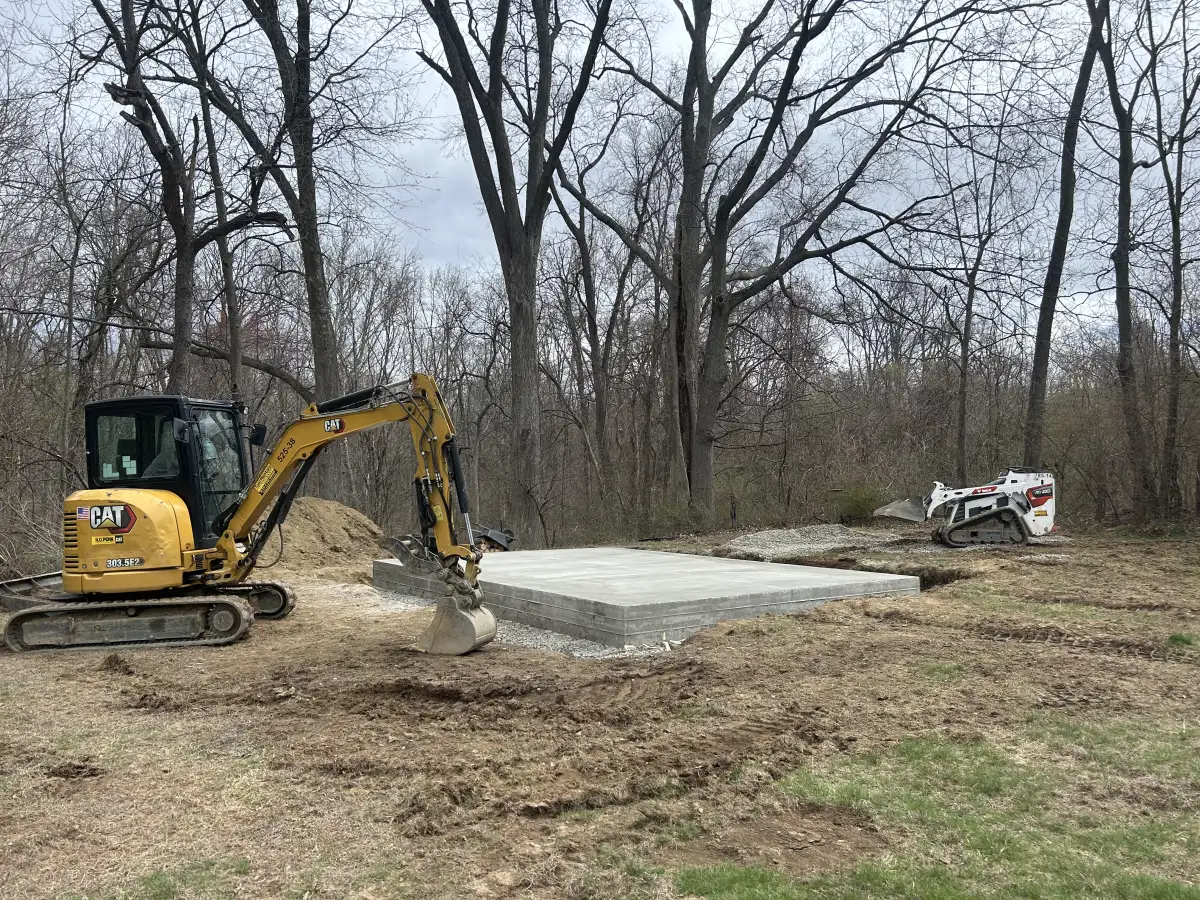
Concrete Work Built for Hudson Valley Conditions
Concrete is the backbone of residential and commercial construction -- foundations, footings, pads, aprons, steps, and flatwork all depend on properly placed and finished concrete. In Dutchess County, where freeze-thaw cycles are severe and clay soils expand and contract with moisture, concrete work must be done right the first time or it cracks, heaves, and fails.
At All American Lawn & Landscape, we handle concrete projects from demolition of old surfaces through forming, pouring, finishing, and curing. We work with ready-mix suppliers to specify the right concrete mix for your application -- including air-entrained concrete for exterior flatwork that resists freeze-thaw spalling, and high-strength mixes for load-bearing pads and footings.
Owner Evan Turenchalk evaluates every concrete project on site. He assesses the sub-grade, determines drainage requirements, and specifies the concrete thickness, reinforcement, and joint spacing for your specific application. We also handle old concrete removal and site preparation with our own excavation equipment, keeping the project under one roof from start to finish.
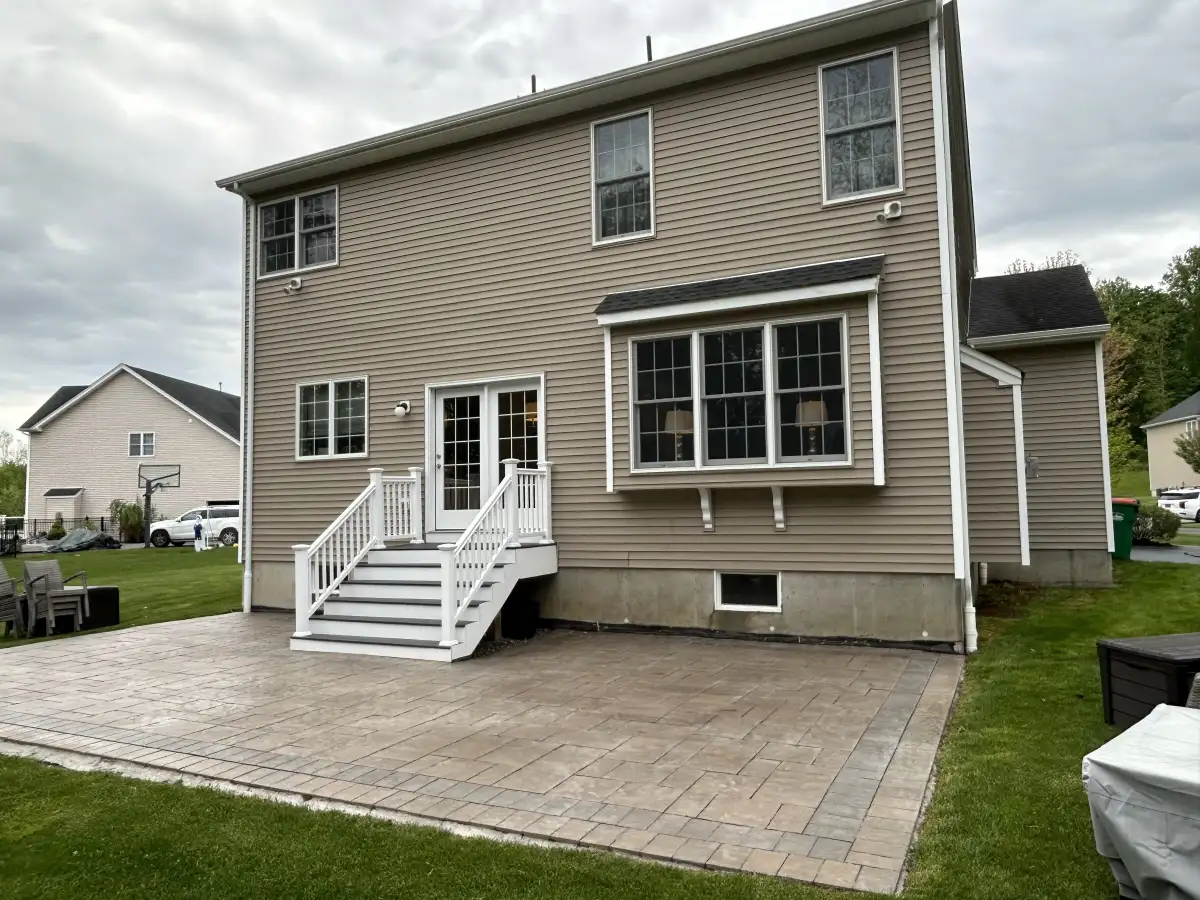
Concrete Pads, Aprons, Steps, and Removal
Concrete Pads
Level pads for sheds, hot tubs, generators, HVAC units, and equipment. Properly reinforced with wire mesh or rebar and poured on compacted gravel base.
Concrete Steps & Stoops
Poured concrete front steps, side-door stoops, and basement stairwells. Properly sized footings prevent settling and frost heave.
Driveway Aprons
Concrete aprons at the base of driveways where they meet the road. Reinforced to handle vehicle weight and road plow contact.
Concrete Removal
Breaking up and hauling away old cracked concrete pads, walkways, patios, and driveways. Site ready for new construction or landscaping after removal.
Footings & Foundations
Concrete footings for retaining walls, additions, decks, and post bases. Poured below the 42-inch frost line required in Dutchess County.
Concrete Costs in Dutchess County
- Concrete pad (4 inch): $8 to $15 per square foot. A 10x12 shed pad costs approximately $1,000 to $1,800.
- Stamped concrete: $15 to $28 per square foot. Pattern and color selection affects pricing.
- Concrete steps (3-4 steps): $1,500 to $3,500 depending on width and footing depth.
- Driveway apron: $1,000 to $3,000 depending on width and thickness.
- Concrete removal: $3 to $8 per square foot including haul-away.
All prices include forming, pouring, finishing, and basic curing protection. Complex shapes, remote access, and rock removal during excavation can increase costs. Evan provides exact pricing after the site assessment.
Concrete FAQ
What We Check Before We Pour
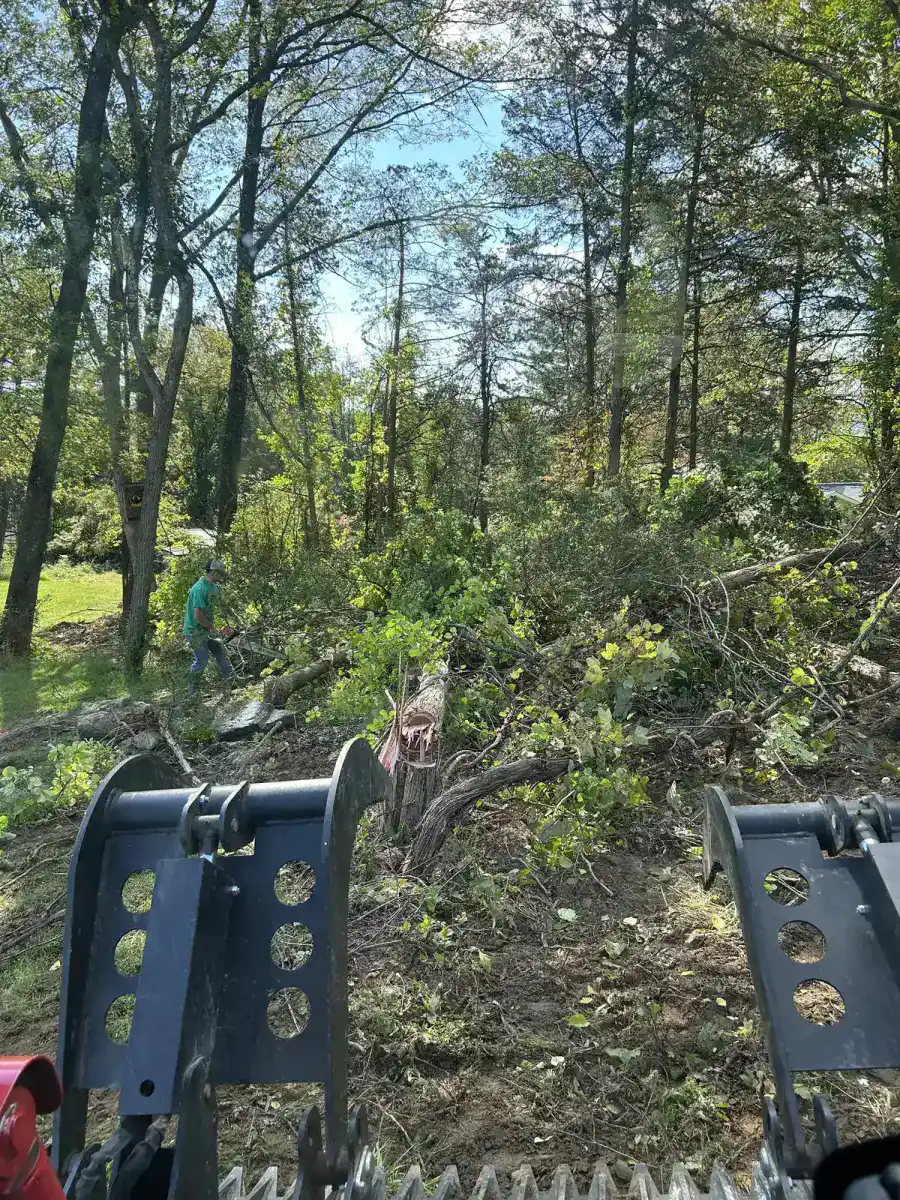
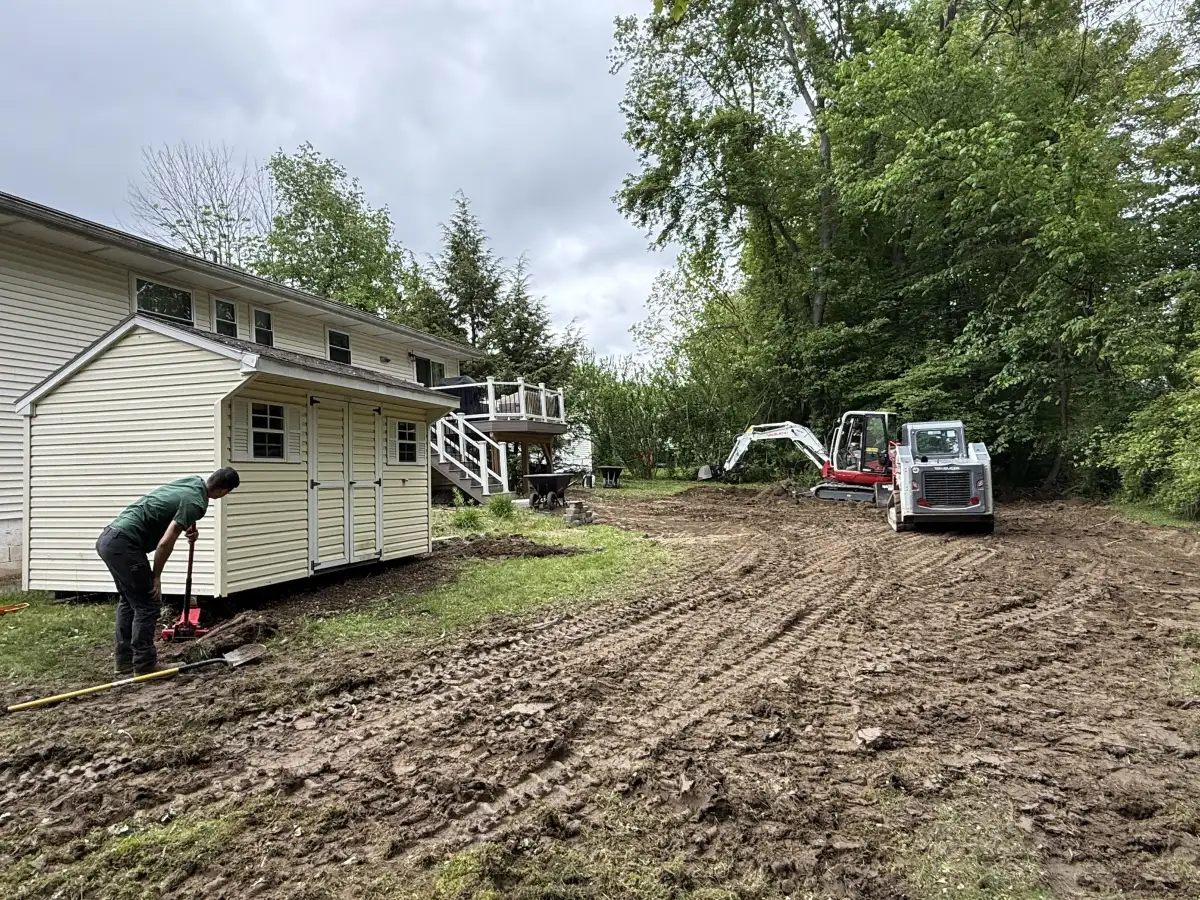
Concrete lasts when the preparation is right. Before we price a pad, apron, steps, or stamped concrete surface, we look at the soil below it, how water moves around the work area, where equipment can enter, and how the new slab will meet existing grades. A concrete pad that is too low can collect water. A driveway apron without the right base can settle where vehicles stop and turn. Steps without a frost-conscious footing can move away from the house after several Hudson Valley winters.
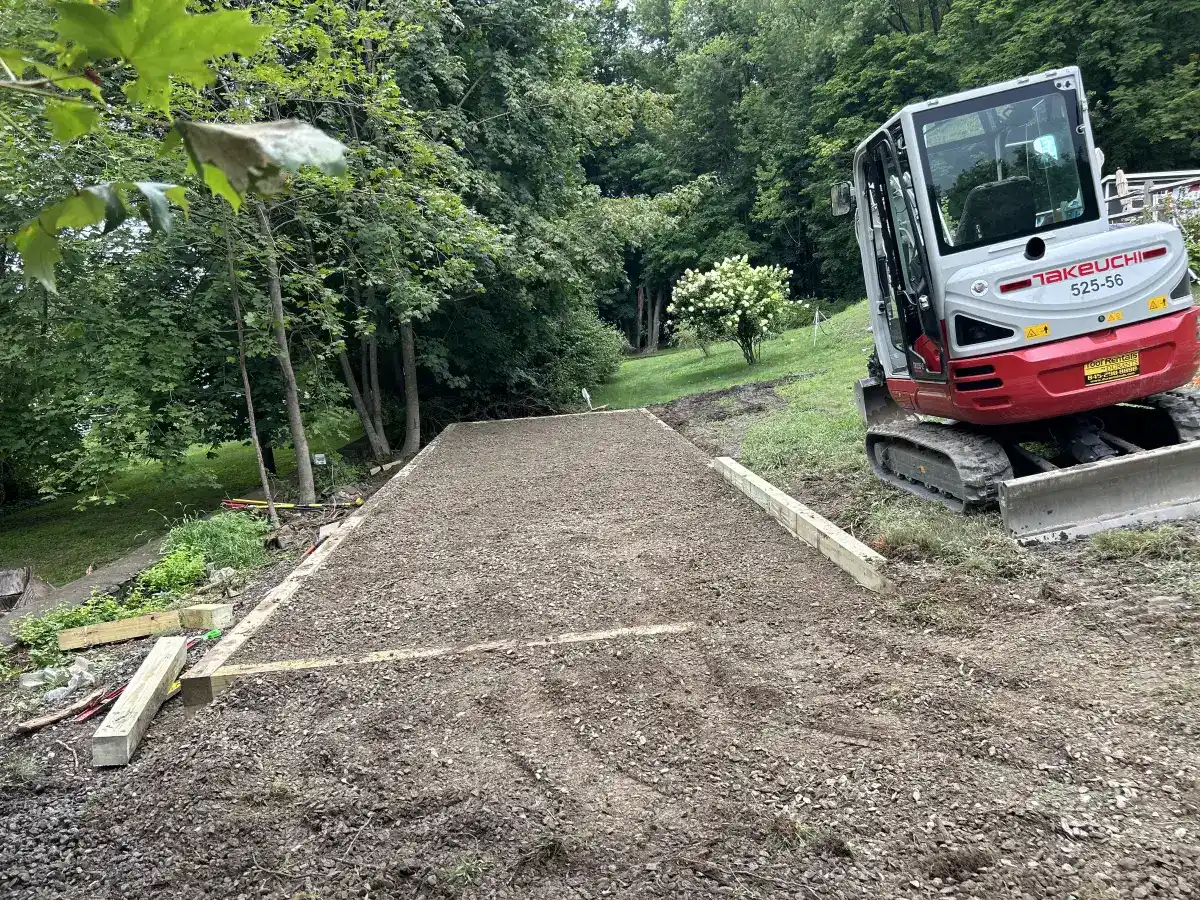
Our process starts with demolition or excavation when needed. Old concrete is removed cleanly, weak soil is dug out, and the base is rebuilt with compacted stone. We set forms to the correct pitch, plan control joints, and discuss reinforcement before the truck arrives. For exterior flatwork in Dutchess County, air-entrained concrete is important because it helps the surface handle freeze-thaw cycles. Thickness, wire mesh, rebar, edge detail, and curing protection are matched to the intended use rather than guessed from a one-size-fits-all price.
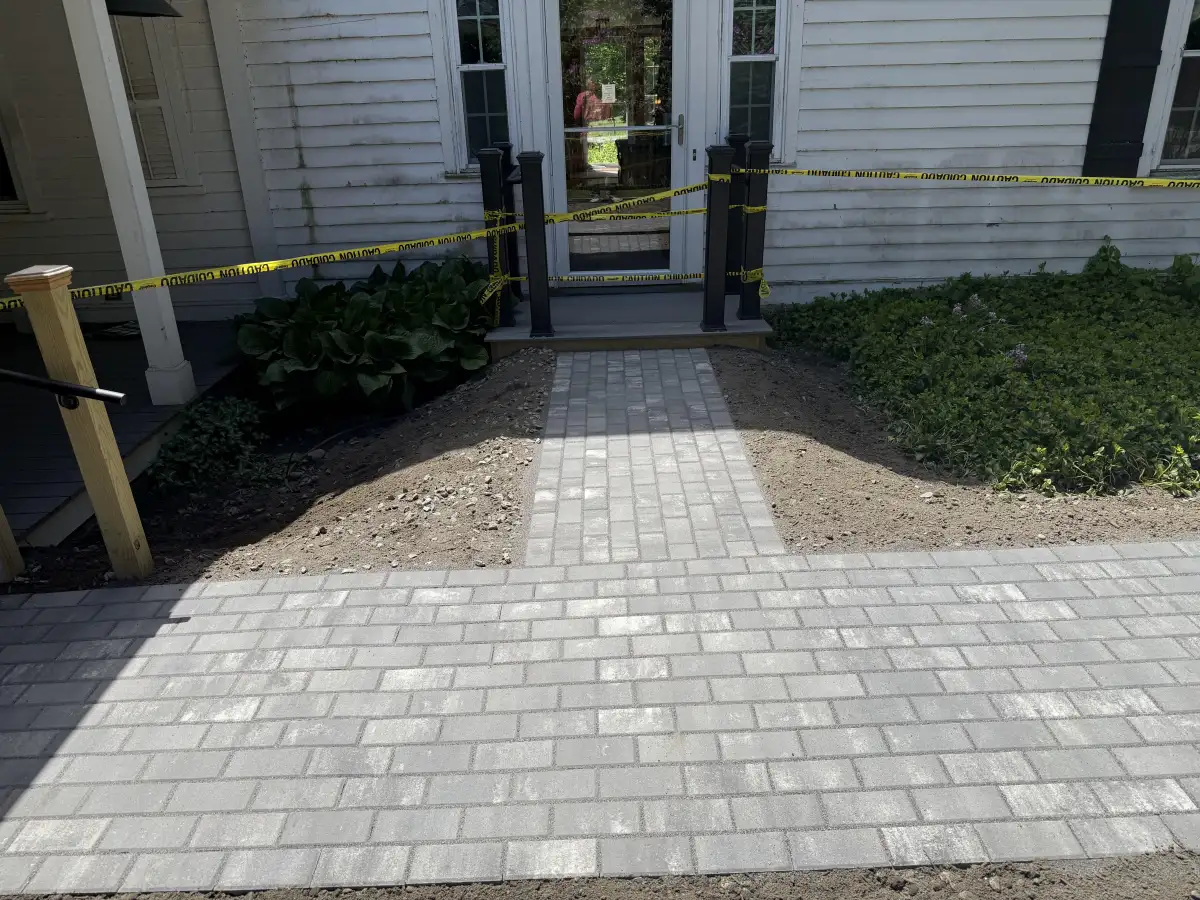
Concrete also has to fit the rest of the property. If a shed pad needs a gravel approach, we can coordinate it with gravel driveway work. If a patio area would perform better with pavers because the grade shifts or future repair access matters, we will explain that option. If drainage is the reason old concrete failed, we may recommend grading, a drain line, or downspout routing before a new pour. That honest planning keeps the finished surface useful and reduces callbacks.
Homeowners typically call us for shed pads, hot tub pads, generator pads, walkway sections, stoops, garage aprons, small commercial pads, and concrete removal before a landscape or hardscape upgrade. We serve Hopewell Junction, Beekman, Fishkill, Wappingers Falls, East Fishkill, Poughkeepsie, LaGrange, and surrounding Dutchess County areas. The best first step is an on-site review where Evan can measure the work, inspect access, and explain what preparation is included in the estimate.
Concrete Pricing Depends on Load, Access, and Drainage
Useful concrete estimates answer more than square footage. We ask what the slab will support, whether vehicles or equipment will cross it, how soon it needs to be used, and whether the surrounding grade can shed water. We also check if demolition, hauling, imported stone, compaction, forming, reinforcement, saw cuts, or cleanup should be included. Those details explain why two pads of the same size can have different prices and different preparation requirements.
For homeowners comparing options, photos help but an on-site visit is still important. Evan can confirm access for the concrete truck or buggy, measure the slope, identify drainage risks, and explain whether concrete, pavers, or gravel is the better fit for the intended use.
Weather, Curing, and Follow-On Trades
Concrete schedules are weather sensitive, so we also discuss timing, curing protection, and access before setting a pour date. If another contractor, shed delivery, generator installation, or patio project depends on the concrete, tell us during the estimate. We can plan the base, dimensions, and finish around that next step instead of treating the slab as an isolated task.
A concrete proposal should call out base depth, forms, reinforcement, finish, curing expectations, demolition, disposal, and any drainage work tied to the pour. With those items defined, homeowners can compare concrete options by performance and preparation instead of only looking at square footage.