
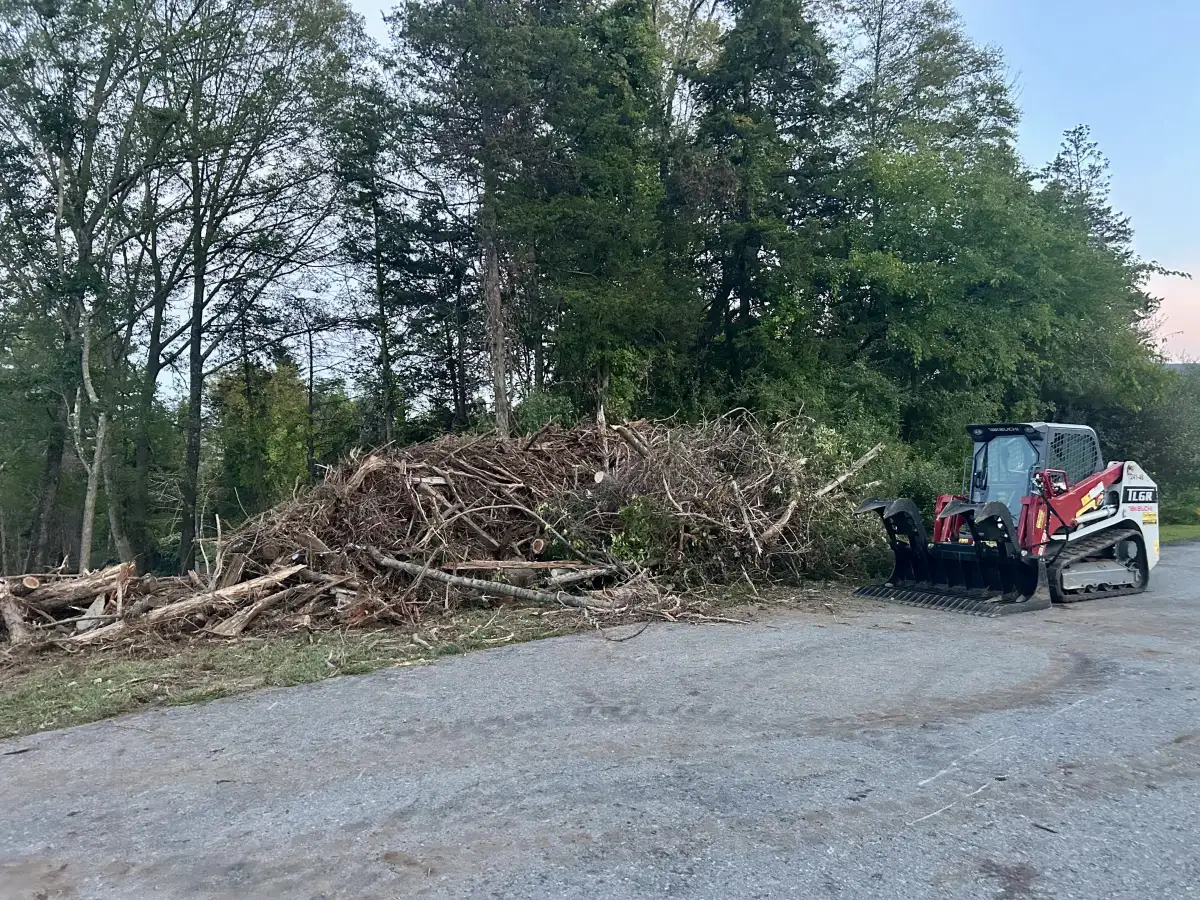
Clearing Opens the Site; Regrading Makes It Work
Land clearing removes the brush, small trees, vines, stumps, and debris that keep a property from being usable. Regrading decides what happens next. Without grade planning, a cleared area can still be rough, wet, hard to mow, or pitched toward the house. All American Lawn & Landscape combines both steps when the goal is a cleaner, more functional property rather than a temporary cleanup.
This is common on Dutchess County lots with wooded back edges, overgrown side yards, rough construction areas, old garden zones, or driveway expansions. Evan looks at slope, soil, drainage direction, access for equipment, disposal needs, and the finished surface you want before writing the quote.
- Brush clearing, small tree removal, and overgrowth cleanup
- Rough grading for lawn, access, driveway, or outdoor use
- Drainage-aware slope correction around homes and low areas
- Stone, seed, topsoil, or further site prep after clearing
What Affects Regrading and Clearing Cost
The size of the area is only one factor. Dense brush, mature roots, wet ground, ledge, steep slopes, haul-off volume, and limited access can all change the time and equipment required. A small backyard can cost more than expected if machines cannot reach it easily or if material has to be carried out in stages. A larger open area may move quickly if access is good.
Evan reviews these conditions in person so the written estimate can separate clearing, grading, hauling, fill, topsoil, stone, seed, and drainage items. The written breakdown helps homeowners decide whether to complete the full transformation at once or phase the work in a practical order.
Planning Around the Way the Area Will Be Used
A cleared area meant for lawn should finish differently than a cleared area meant for a gravel driveway, shed pad, firewood storage, fence line, sports area, or future patio. The final use affects compaction, soil blending, stone depth, drainage pitch, and cleanup standards. All American Lawn & Landscape asks about that end use before starting, then shapes the work around it.
The goal is not just to make the property look open on day one. The goal is to leave a surface that can be maintained, drained, and improved without redoing the same work again next season.
Review the Clearing and Grading Goal
Tell us what the overgrown or uneven area needs to become, and Evan will scope the clearing, disposal, slope correction, and finish surface around that end use.
Request Your Free QuoteTurning Rough Ground Into Maintainable Space
After brush and debris are removed, the real condition of the ground becomes visible. There may be stump holes, old ruts, hidden rocks, low wet pockets, uneven fill, or slopes that are too rough to mow. Regrading turns that exposed ground into something that can actually be maintained. The finished plan may call for rough grading only, or it may include topsoil, seed, gravel, drainage, or additional excavation depending on the intended use.
All American Lawn & Landscape asks homeowners how they want to use the cleared area before deciding how far to take the grading. A future lawn needs different soil preparation than a storage area, shed pad, driveway extension, fence line, or wooded buffer. A drainage route should not be blocked just because the area looks flatter. A steep transition may need a swale, stone, retaining edge, or staged slope instead of one abrupt grade change.
Disposal is another important part of the plan. Brush, logs, stumps, roots, rocks, and unsuitable fill all affect the schedule and cost. Some material can be chipped, staged, spread, or reused on site. Other material has to be loaded and hauled. Evan reviews those options during the estimate so the scope is clear before equipment arrives.
The best regrading and clearing projects leave the property easier to own. Mowers can reach the area. Water moves away from the house. Edges are cleaner. Future landscaping, fencing, lawn, or hardscaping work has a stable starting point. That is the difference between simply knocking down overgrowth and making the land useful again.
Regrading and Land Clearing Should Leave the Property Usable
Regrading and land clearing are often the first steps toward a better yard, driveway, building site, drainage system, or outdoor living area. The goal is not just to remove brush or move soil. The goal is to leave a surface that drains properly, can be maintained, and is ready for the next phase. We start by reviewing slope, access, water movement, trees, stumps, rock, soil quality, and the intended use of the cleared area.
On wooded Dutchess County lots, clearing can reveal hidden problems: boulders, old debris, standing water, invasive roots, failing stone edges, and grades that pitch toward the house or driveway. We remove brush and small trees where appropriate, manage debris, and use equipment carefully so the work area does not become a rutted mess. If the cleared space will become lawn, gravel, a patio, a pad, or a driveway extension, we plan the cut and fill around that future use.
Regrading is especially important where water is damaging the property. Low spots, settled backfill, high shoulders along driveways, and poor transitions around patios can all direct water where it does not belong. We may recommend swales, soil correction, stone, French drains, or driveway reshaping depending on the site. Land clearing may also pair with gravel driveway installation, excavation, fencing, or lawn installation.
All American Lawn & Landscape handles regrading and land clearing in Hopewell Junction, East Fishkill, Beekman, Fishkill, Wappingers Falls, Poughkeepsie, LaGrange, and nearby communities. Evan can walk the property, separate clearing needs from grading needs, and provide a practical scope that prepares the land for real use instead of simply making it look open for a short time.
How We Define a Finished Clearing or Grading Job
Before clearing or regrading starts, we define what the area should become. A future lawn, gravel drive, shed pad, fence line, drainage swale, and patio base all need different finish conditions. We ask what should be removed, what should stay, where equipment can enter, and whether material should be hauled away or reused on site.
Evan checks slope, runoff, stumps, roots, rock, soil quality, and nearby structures before recommending the scope. That helps the crew leave the property ready for the next phase instead of simply opened up with unresolved water, debris, or rough grade problems.
Coordinating Clearing, Grading, and Finish Material
For larger clearing or grading projects, it helps to identify the final use before work begins. A mowed field, new lawn, driveway, building pad, fence line, or drainage route each needs a different finish. Evan uses that goal to decide what to remove, what to preserve, how smooth the grade should be, and whether stone, topsoil, or seed should be included.
After the clearing and grading review, the estimate should explain removal limits, haul-off or reuse options, rough grade expectations, drainage direction, and whether topsoil, seed, or stone is included. That helps homeowners understand whether the project will simply open the area or leave it ready for mowing, access, drainage, or the next outdoor improvement.