How to Compare Excavation Companies for Residential Site Work
Excavation looks simple from the road, but the quote depends on what is underground, how equipment reaches the work area, where material goes, and how the surface should be left afterward. A responsible excavation company asks about the next phase before digging. Is this a utility trench, a foundation area, a drainage correction, a driveway base, a propane tank location, or demolition cleanup? Each use needs a different finish.
Dutchess County properties can include clay, ledge rock, steep grades, wooded access, old fill, and wet pockets near creeks or low lawns. All American Lawn & Landscape reviews those conditions during the site visit so the written estimate reflects access, hauling, stone, drainage, restoration, and cleanup needs.
- Site grading and regrading for usable lawn or construction areas
- Utility trenching, drainage trenching, and stone base preparation
- Concrete pad removal, patio removal, and compact demolition support
- Driveway excavation, gravel base work, and rough-to-finish transitions
A Smaller Excavation Company With Direct Accountability
Large excavation companies are not always the best fit for residential work where access is tight and the details matter. All American Lawn & Landscape is owner-operated, which means Evan reviews the property, explains the plan, and stays accountable for the final condition of the site. That direct communication helps when the job changes because rock, water, buried debris, or grade issues appear during excavation.
The crew uses compact equipment where appropriate, protects surrounding areas as much as the site allows, and discusses staging before the work begins. Written quotes define what gets excavated, what gets hauled away, what material is installed, and whether final grading, seed, stone, or additional drainage is part of the scope.
How to Prepare for an Excavation Estimate
Before the visit, think about the finished outcome you need. Mark the rough work area, note any underground utilities or private lines you know about, gather surveys or permits if available, and identify where trucks can enter. Photos after heavy rain are useful for drainage-related excavation because they show water movement that may not be visible on a dry day.
Evan will still verify conditions on site, but clear goals make the estimate more accurate. The final recommendation may include related grading, drainage, retaining, stone, or cleanup work if those items are needed to keep the excavation from creating a new problem.
Get a Residential Excavation Scope
Share the digging, grading, trenching, or removal goal and Evan will review access, soil, hauling, and finish-grade needs before pricing the work.
Request Your Free QuoteWhat Should Be Included in an Excavation Quote
A good excavation quote should explain more than the machine time. It should describe the work limits, approximate depth, material handling, access route, hauling assumptions, imported material, compaction needs, and how the area will be left. If the work touches drainage, the quote should identify where water is expected to go after the digging is finished. If the work prepares for a driveway, patio, slab, tank, or utility, the quote should match the preparation to that use.
All American Lawn & Landscape keeps those items in the conversation early because omissions are expensive. A trench that is backfilled poorly can settle. A driveway base without adequate stone can rut. A foundation or drainage excavation without a cleanup plan can leave a rough yard. A demolition removal that excludes hauling can surprise the homeowner after debris is already piled up.
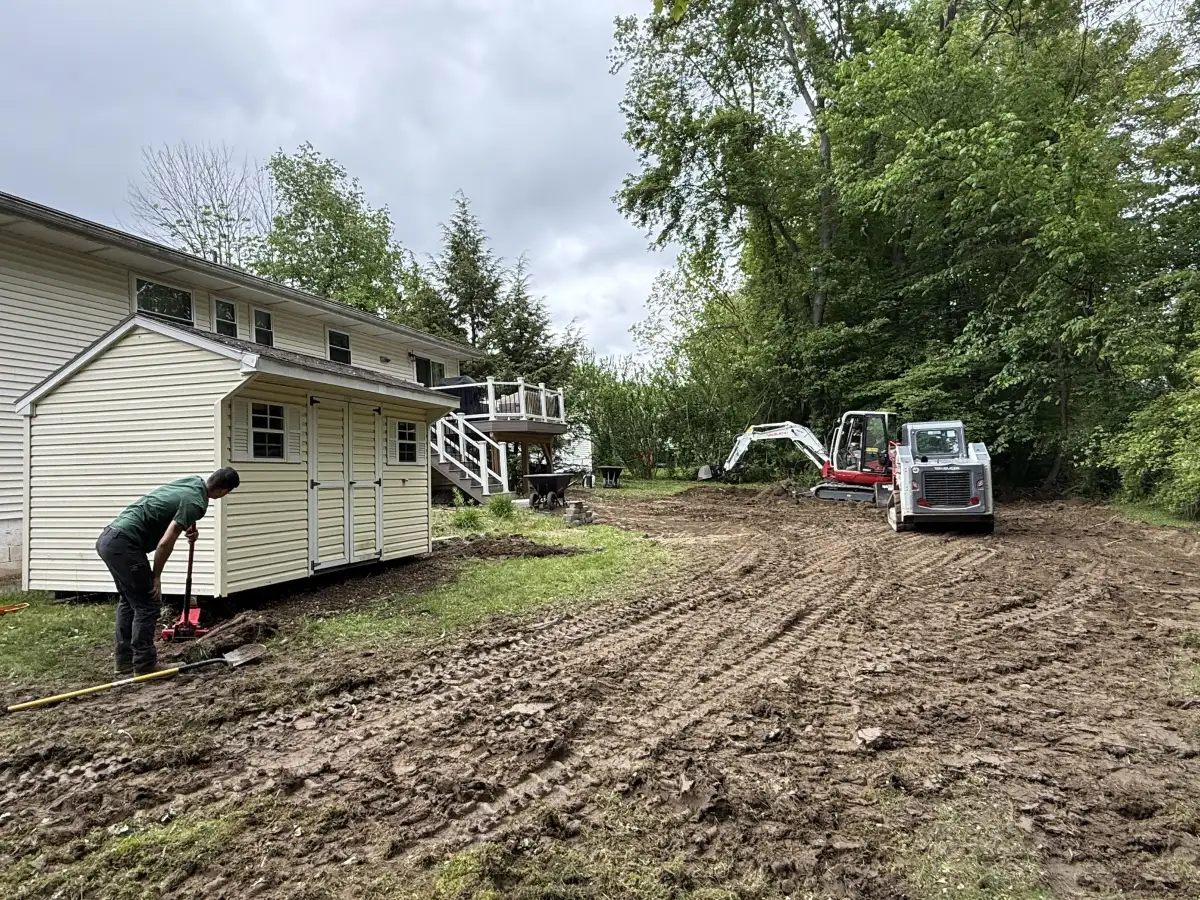
During the site visit, Evan evaluates whether compact equipment can complete the work or whether larger equipment and trucks are needed. He checks turning room, overhead branches, soft lawn areas, fences, gates, slopes, and staging space. If material can stay on site for grading, that may reduce hauling. If it must leave the property, disposal needs to be included. If rock, groundwater, or buried debris are likely, those contingencies should be discussed before scheduling.
This kind of quote is especially useful for residential projects because the excavation is often one step in a larger improvement. The finished grade may need seed, gravel, topsoil, drainage stone, or a hardscape base. Planning those details upfront keeps the job cleaner and helps homeowners compare excavation companies on scope instead of only price.
Residential Excavation With Finish-Grade Thinking
When property owners compare excavation companies, the machine is only part of the decision. The operator also has to understand drainage, slope, soil, access, and what the finished property should look like after the digging is done. We handle excavation for pads, trenches, grading corrections, drainage systems, utility routes, driveway improvements, land clearing, and hardscape preparation with that full site picture in mind.
Every excavation estimate starts with practical constraints. We look at the route from the road to the work area, overhead branches, narrow gates, soft lawn areas, septic and well locations, foundation proximity, buried utilities, and where spoils can be placed or hauled. Dutchess County properties often include rock, clay, roots, and slopes that change the difficulty of a job. Calling those factors out before work begins prevents surprises and helps the homeowner understand why one dig is simple and another needs more planning.
Excavation also determines whether the next trade or service succeeds. A French drain trench must have the right pitch and outlet. A concrete pad needs a compacted base at the correct depth. A paver patio requires excavation that allows for stone base, bedding material, edge restraint, and final grade. Land clearing should not leave stumps, ruts, or low spots that collect water. We connect the excavation phase to drainage, driveway, concrete, and hardscape outcomes.
Homeowners in Hopewell Junction, East Fishkill, Beekman, Fishkill, Wappingers Falls, Poughkeepsie, LaGrange, and nearby areas call us when they need a contractor who can dig, grade, clean up, and explain the work clearly. Evan reviews the site personally, sizes the equipment to the property, and provides an estimate that reflects access, soil, disposal, and finishing needs instead of just quoting machine time.
Information That Helps an Excavation Quote
Excavation quotes become clearer when the finished purpose is known. A trench for drainage, a pad for equipment, a driveway expansion, and a rough grade for lawn all require different depths, materials, compaction, and cleanup. We ask homeowners to share surveys, utility markings, septic or well information, photos after rain, and any permit or setback concerns they already know about.
Evan then checks machine access, turning room, overhead branches, soil conditions, rock likelihood, spoil placement, and hauling needs. That review helps determine whether the work can be handled with compact equipment or whether trucks, imported material, or additional restoration should be included from the start.
Scheduling Excavation Around Weather and Access
Scheduling excavation around weather is important because wet soil changes access, compaction, and cleanup. We also discuss whether the area must remain usable during the project, where vehicles should park, and how soon the finished grade needs to support traffic, concrete, pavers, seed, or stone. Those timing details help prevent avoidable disruption.
After the excavation walk-through, the quote should define depth, material handling, hauling, imported stone or soil, compaction, cleanup, and the condition needed for the next phase. That helps homeowners compare excavation scopes by what will actually happen on the property, not only by machine time.