
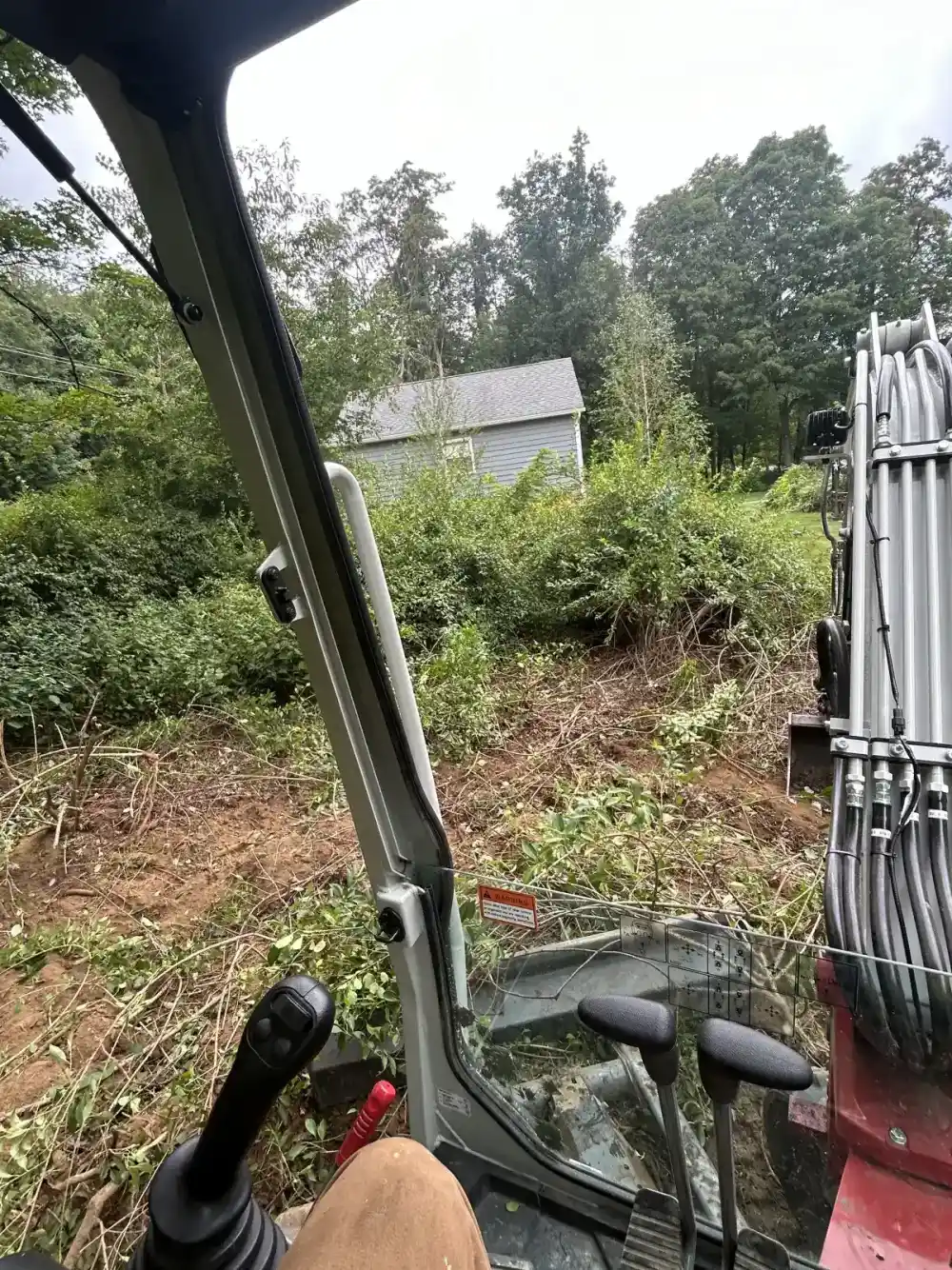
A clearing estimate should describe what will remain as clearly as what will be removed. Begin with the intended use of the area, then review the boundaries and site conditions with the project team.
Mark the proposed work area
Explain whether the aim is to reclaim an overgrown part of the yard, prepare for a planned feature or remove selected vegetation. Identify trees, planting and other features you want to retain. Have boundary or location uncertainties resolved before treating a sketch as authorization to clear.
Connect removal to the next use
Brush removal, tree work and stump handling are different parts of a scope. Ask which are proposed and why they suit the intended result. If construction will follow, coordinate the clearing with the relevant design and site-preparation requirements.
Review access and material handling
Walk the proposed route for equipment and deliveries. Discuss staging, nearby features to protect and how removed material will be handled. Ask the contractor to identify the proposed disposal arrangements and applicable requirements rather than assuming a particular method is available.
Establish the approvals and constraints
Property conditions and the proposed work may require further investigation or approvals. Share available plans and relevant records. Ask who will determine the current requirements and complete any necessary coordination before work begins.
Include the condition left behind
Clarify whether grading, drainage work, soil preparation, seeding or other restoration is part of the proposal. A cleared area and a finished lawn are different deliverables. The estimate should make the intended handoff condition clear.
Compare written scope before totals
Area alone does not describe the amount of vegetation, access, handling or connected work. Request a property-specific price that identifies inclusions, exclusions and assumptions. Ask how a discovered condition or requested change would be documented and approved.
All American can discuss your land clearing project in Dutchess County. Bring the property location, intended use and any available plans to the first conversation.