
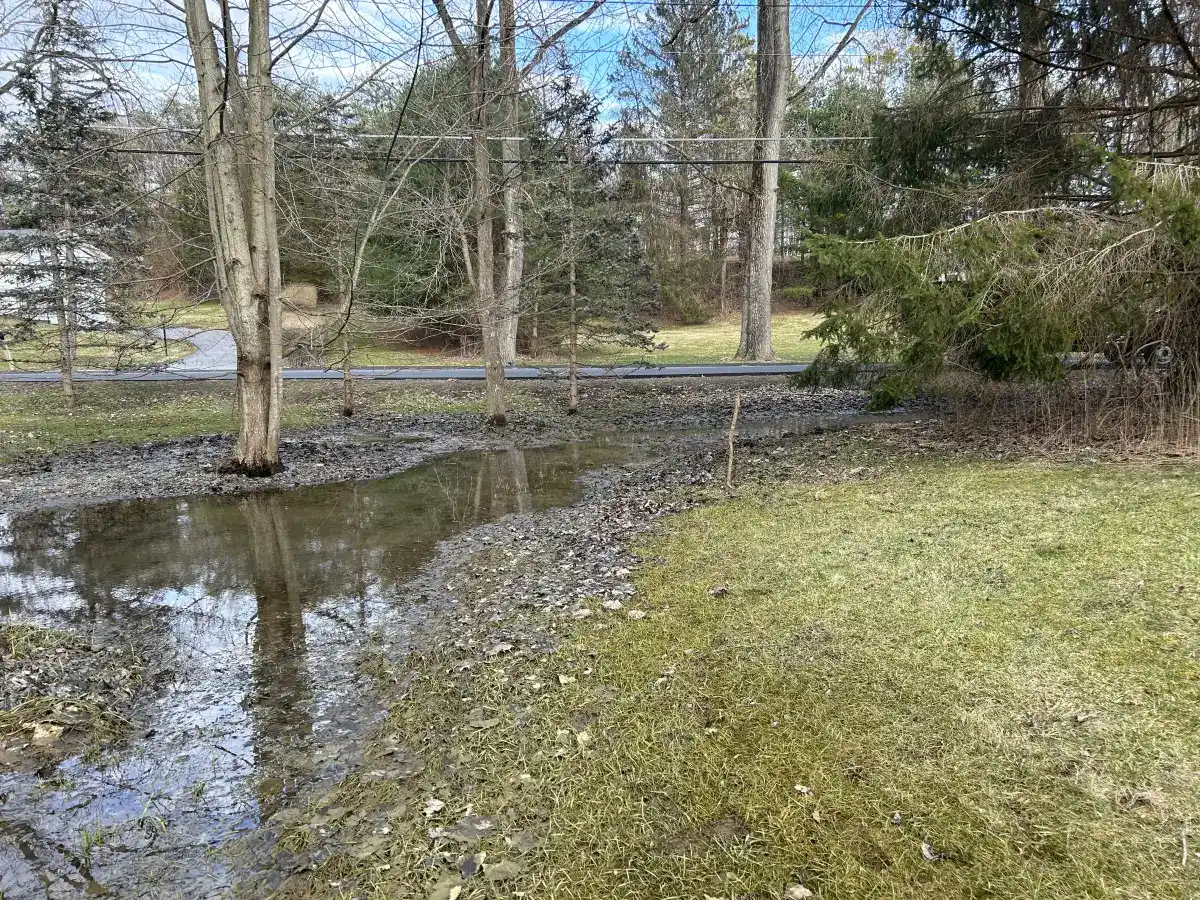
Record when and where water appears
Take photographs from accessible locations showing the wet area and the surrounding yard. Note the weather, where water seems to enter and how long the condition persists. Share observations without assuming they identify an underground cause.
Include nearby surfaces and outlets
Show downspouts, driveways, slopes and existing drainage features to the project team. Provide any records of earlier work. A close-up of one puddle may leave out the conditions that need to be considered in a broader assessment.
Ask why a proposed approach suits the site
Discuss the problem the proposed grading, drain or other work is intended to address. Ask how the complete water path will be handled and which investigations, design work or approvals may be needed. A named drainage product is not a solution for every property.
Read the excavation and restoration scope
Clarify access, material removal, installation boundaries and what happens to disturbed lawn or planting. Ask what is included and what remains uncertain. Request a project-specific price rather than relying on unsourced fixed ranges for different drainage methods.
Keep the review and care information
At completion, ask about the installed system, relevant care guidance and the contact for future concerns. If the problem changes, have it reassessed instead of assuming a generic repair recipe addresses the cause. Contact All American with the property location and your observations.