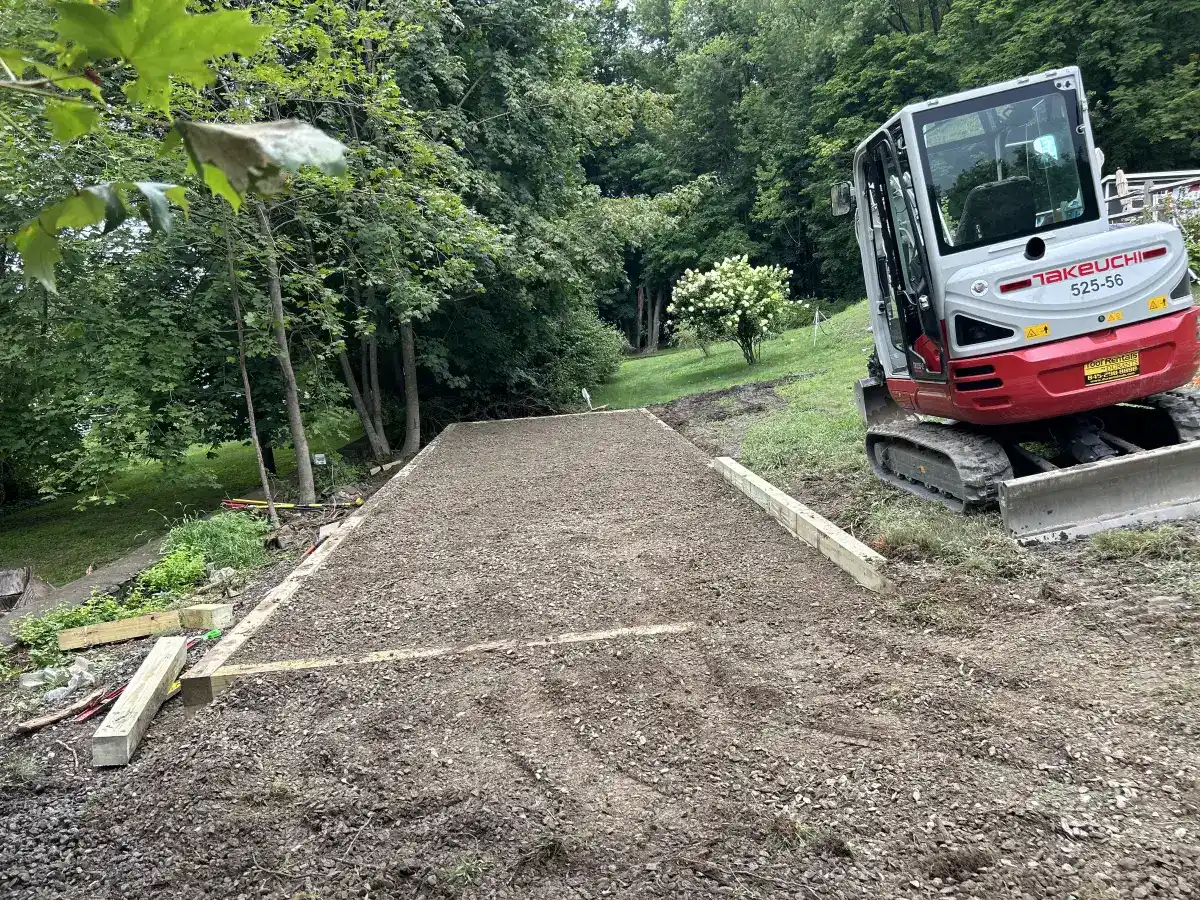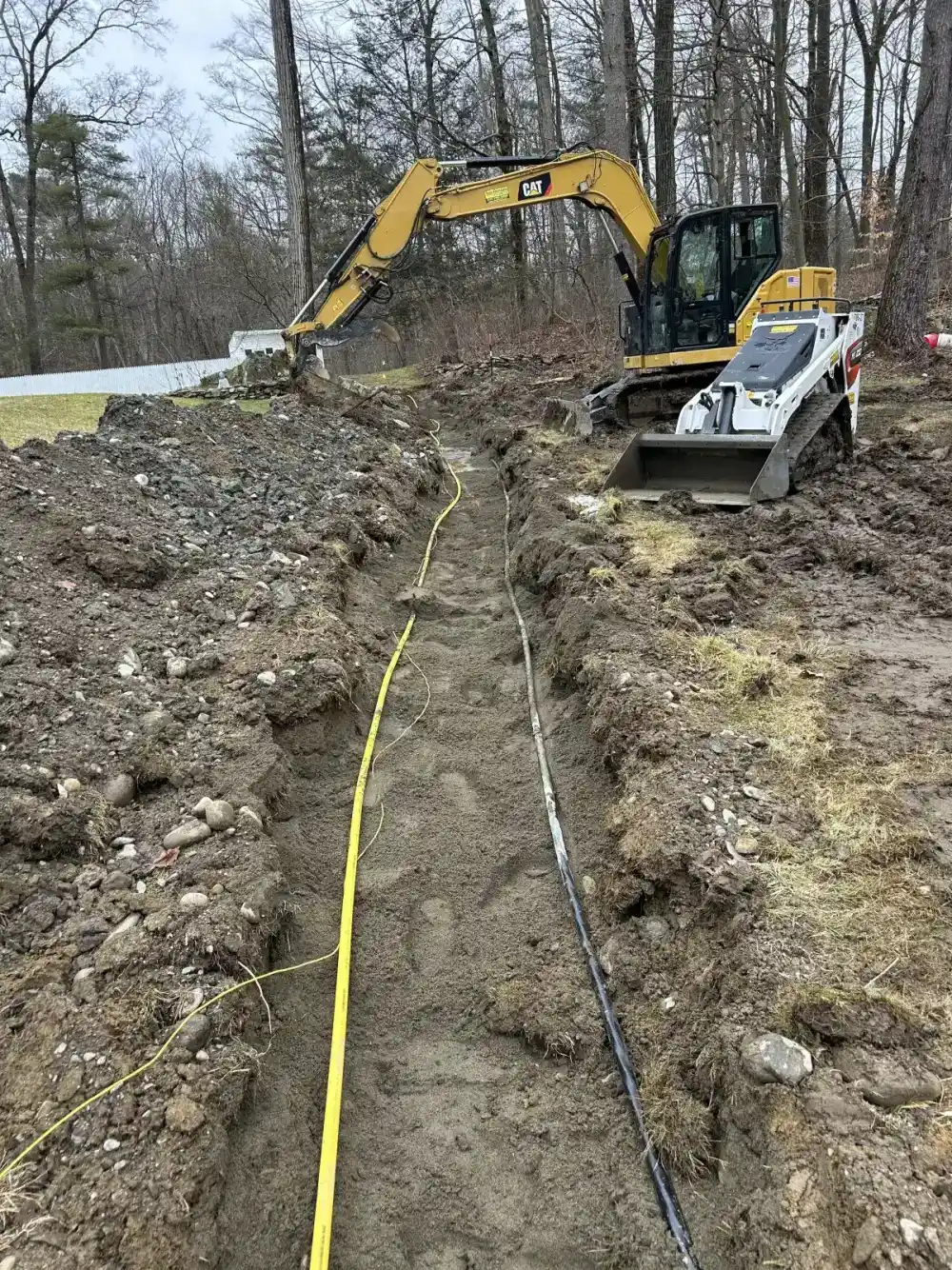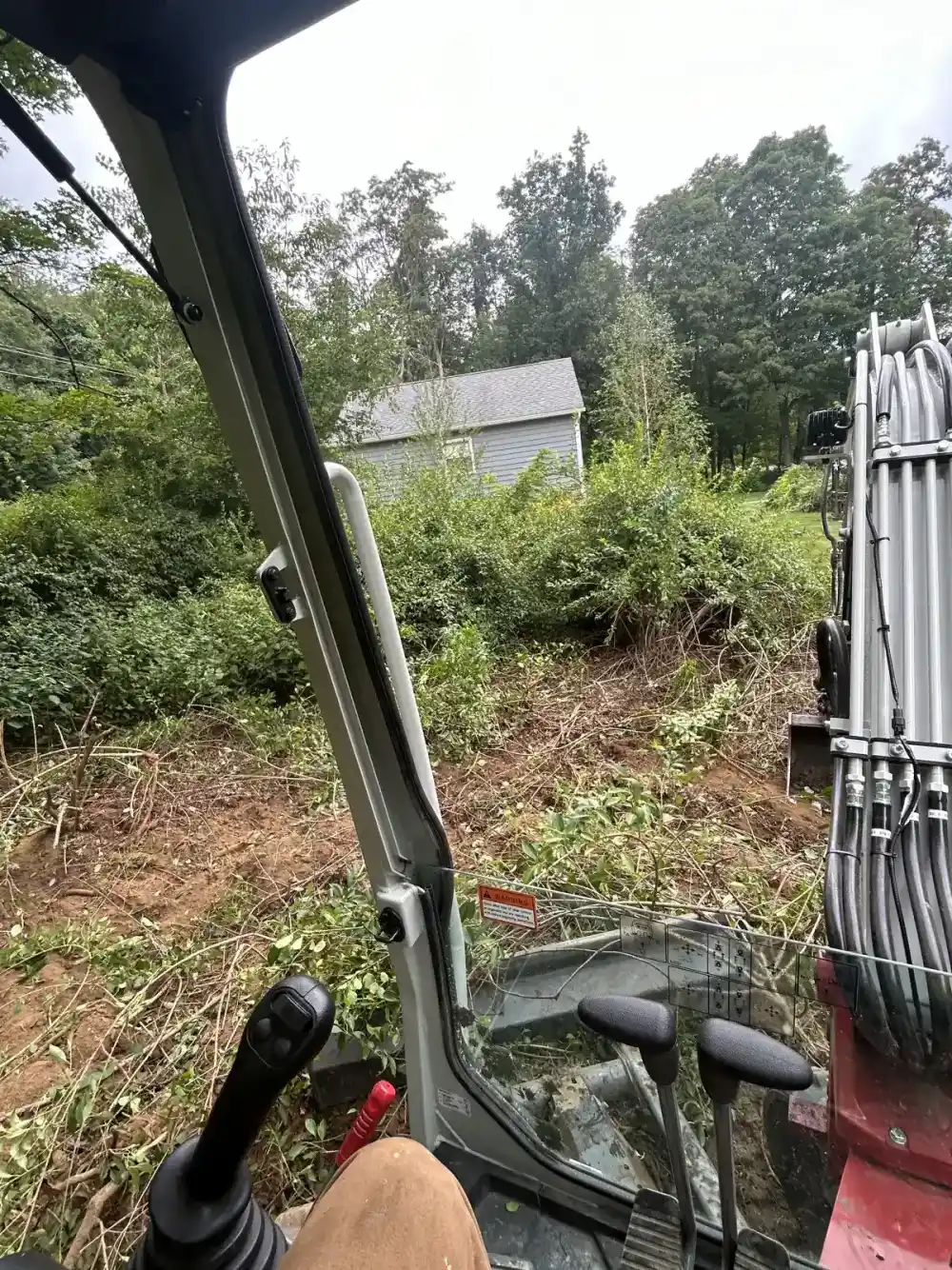
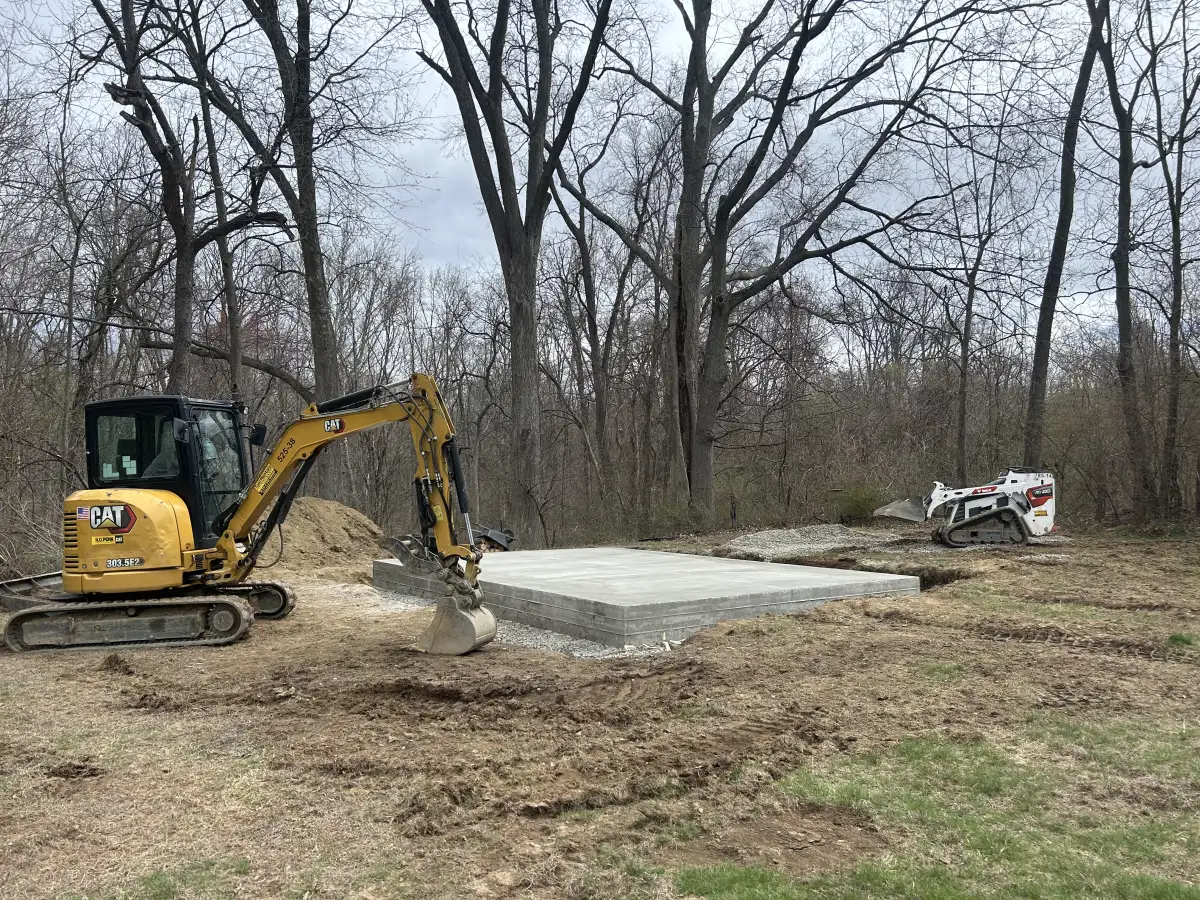
Excavation is often one phase inside a larger property project: correcting a grade, opening a trench, clearing a work area, removing concrete, preparing a foundation or patio area, or creating the base for drainage and driveway work. Before booking an excavation company in Hopewell Junction, homeowners should be able to connect every machine hour and truckload to a defined finished result.
All American Lawn & Landscape provides residential excavation services from its Hopewell Junction base throughout Dutchess County. The questions below help you compare estimates around scope, access, soil, water, utilities, permits, and restoration instead of choosing from a price alone.
What Will the Excavation Accomplish?
Start with the end condition. Ask the contractor to mark the work limits and explain the intended depth, elevations, slope, trench route, or finished grade. A proposal that only says “excavate area” leaves important decisions unresolved. It should be clear whether the work includes removal, digging, stockpiling, backfill, compaction, imported material, rough grading, finish grading, and repair of disturbed surfaces.
The excavation also needs to fit the next phase. A drainage trench must connect to a complete water-management plan. A patio or concrete area needs the right footprint and elevation for the planned finish. A cleared or regraded area needs a stable direction for runoff. Ask who verifies the excavation before it is covered or handed to another trade.
How Will Equipment, Trucks, and Materials Reach the Work Area?
Equipment selection is not only about digging power. Gate width, overhead branches, septic-related areas, driveway condition, side-yard clearance, slopes, soft ground, and nearby structures can limit the route. Ask what machine is expected, where trucks will load or unload, where removed soil or debris will go, and which lawn or finished areas may be crossed.
For properties around Hopewell Junction with wooded edges, long driveways, uneven ground, or tight side yards, access can change both the method and the restoration required afterward. Confirm whether temporary protection, a smaller machine, material staging, traffic control, or lawn repair is included. If a route cannot be used after rain or during another phase, that scheduling dependency belongs in the plan.
What Is Known About Soil, Rock, Water, and Existing Fill?
Subsurface conditions are not fully visible during an estimate. Rock, buried debris, old construction material, roots, unstable fill, saturated soil, and unexpected groundwater can change production or call for a different approach. Around Dutchess County, freeze-thaw cycles, clay-heavy areas, slopes, and moving water can also expose weak preparation or drainage problems.
Ask what the estimate assumes and how an unexpected condition will be documented, priced, and approved. A contractor should not promise to know what cannot be seen, but the proposal can still define a fair change process. Where water is part of the project, review the related drainage solution and confirm the outlet, surface pitch, backfill, and final grade before the trench disappears.
Who Handles Utility Marking, Permits, and Required Inspections?
Before digging, confirm who will arrange utility marking and how known private lines or property systems will be identified. Public utility marking does not necessarily locate every private electric line, irrigation component, drain, septic component, invisible fence, propane line, or other owner-installed feature. Share everything you know about the work area and ask what must be located separately.
Permit and inspection requirements depend on the property and the type of work. Ask who will determine whether a permit is required, who submits it, which fees are included, and what must be inspected before backfilling or moving to the next phase. Do not rely on a generic “5 P’s” slogan or a “5-4-3-2-1” phrase as the plan; those labels can mean different things in different contexts. The written scope should name the actual site controls and responsibilities.
How Is the Estimate Structured?
Homeowners often ask what excavation companies charge per hour. An equipment rate can be one part of a price, but it does not show the total cost or whether two proposals deliver the same result. A smaller machine may take longer but fit the access. A larger machine may require more staging. Trucking distance, disposal, imported stone or soil, crew size, rock, dewatering, compaction, permit needs, and restoration can matter as much as operating time.
Compare the written scope line by line. Look for quantities or defined limits where practical, equipment and trucking assumptions, material types, hauling and disposal, erosion or water controls, backfill and compaction, finish grade, cleanup, restoration, exclusions, payment schedule, and a written change process. A low total with open-ended exclusions may not be the lower cost once the property is put back together.
When Will the Work Be Checked?
There is no single inspection interval that fits every residential excavation. Ask for the checkpoints that matter to your project: after layout, when the excavation reaches the intended depth or grade, before pipe or base material is covered, before backfill, after compaction, and at final grading. Rain, soil movement, a utility conflict, or a changed route may require another review.
Also ask who has authority to approve the next step. If another trade depends on the excavation, clarify whether that trade needs to inspect it before equipment leaves or backfill begins. Formal inspections are separate from routine quality checks and depend on the permit and responsible authority.
What Will the Property Look Like at Completion?
“Cleanup included” is not specific enough for excavation. Confirm whether excess soil stays or leaves, how debris is disposed of, whether disturbed lawn receives topsoil and seed, whether tire ruts and access areas are repaired, and whether the final surface is rough graded or ready for its intended finish. Ask who is responsible for settling, drainage performance, and any final adjustment described in the proposal.
If excavation connects with grading, land clearing, driveway work, landscaping, or hardscaping, settle the sequence before work starts. Leaving equipment access until the last heavy phase helps protect finished lawn and hardscape areas.
Choose an Excavation Scope That Fits the Property
Use the excavation companies service page to review the work All American Lawn & Landscape handles, then see the full Hopewell Junction service area for connected outdoor services available locally.
Ready to discuss the site? Call (845) 372-7768 or request a free estimate on the contact page. Describe the project goal, work area, known utilities, access limits, water or slope concerns, and the finish you expect after excavation.
Excavation Company Questions in Hopewell Junction
Ask what is being removed or moved, the intended elevations or finished grade, equipment and material access, utility-marking and permit responsibilities, drainage implications, hauling and disposal, site protection, restoration, schedule assumptions, exclusions, and how changes will be approved.
An hourly figure alone does not show the total cost. Equipment size, crew needs, access, soil and rock, trucking, disposal, imported material, drainage, restoration, and permit requirements can all affect an estimate. Compare written scopes for the same finished result.
There is no single interval for every residential project. The work should be checked at the steps that cannot be reviewed later and whenever rain, soil movement, utility conflicts, or scope changes affect the plan. Formal inspections depend on the project and permitting authority.
No. Numbered rules and planning slogans can mean different things in different contexts. Rely on a site-specific written scope that addresses utilities, access, soil, water, safety, permits, intended grade, and restoration.