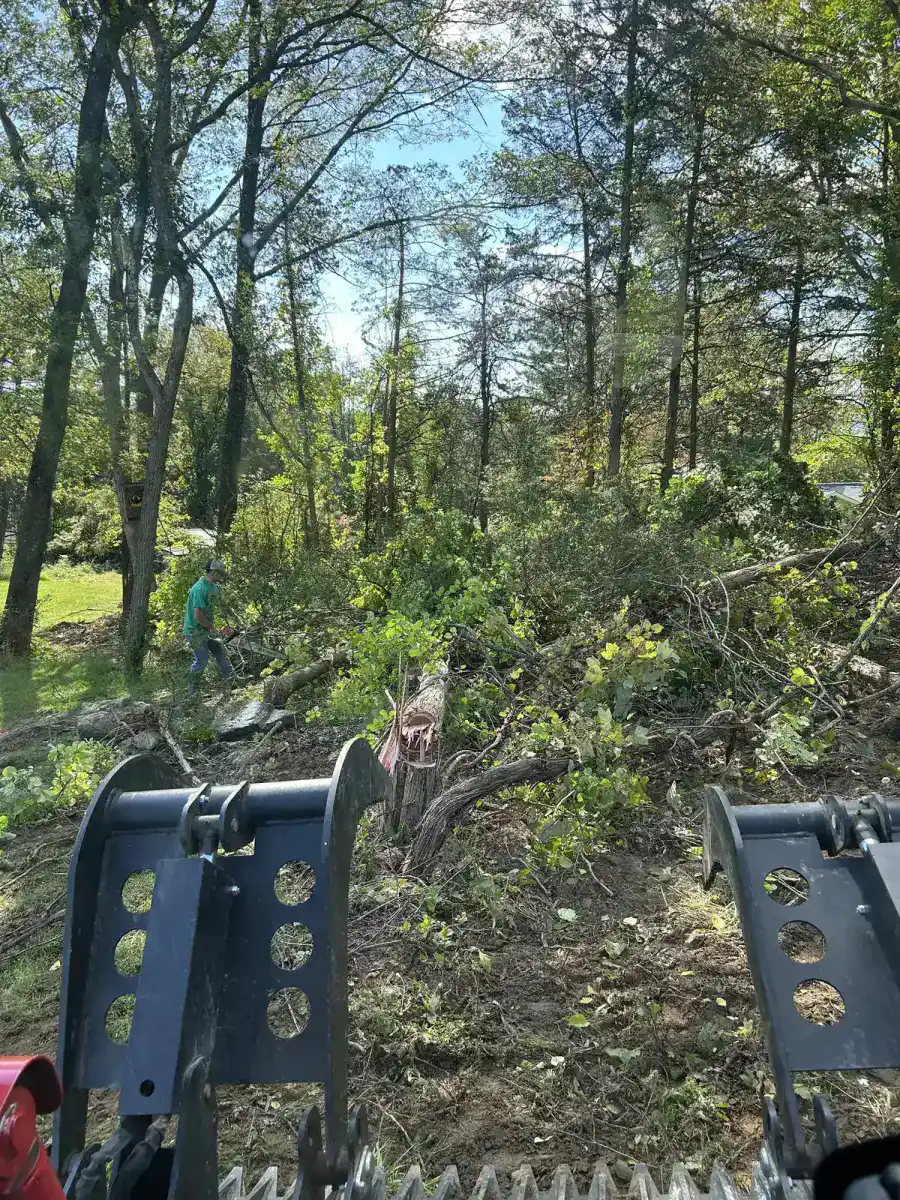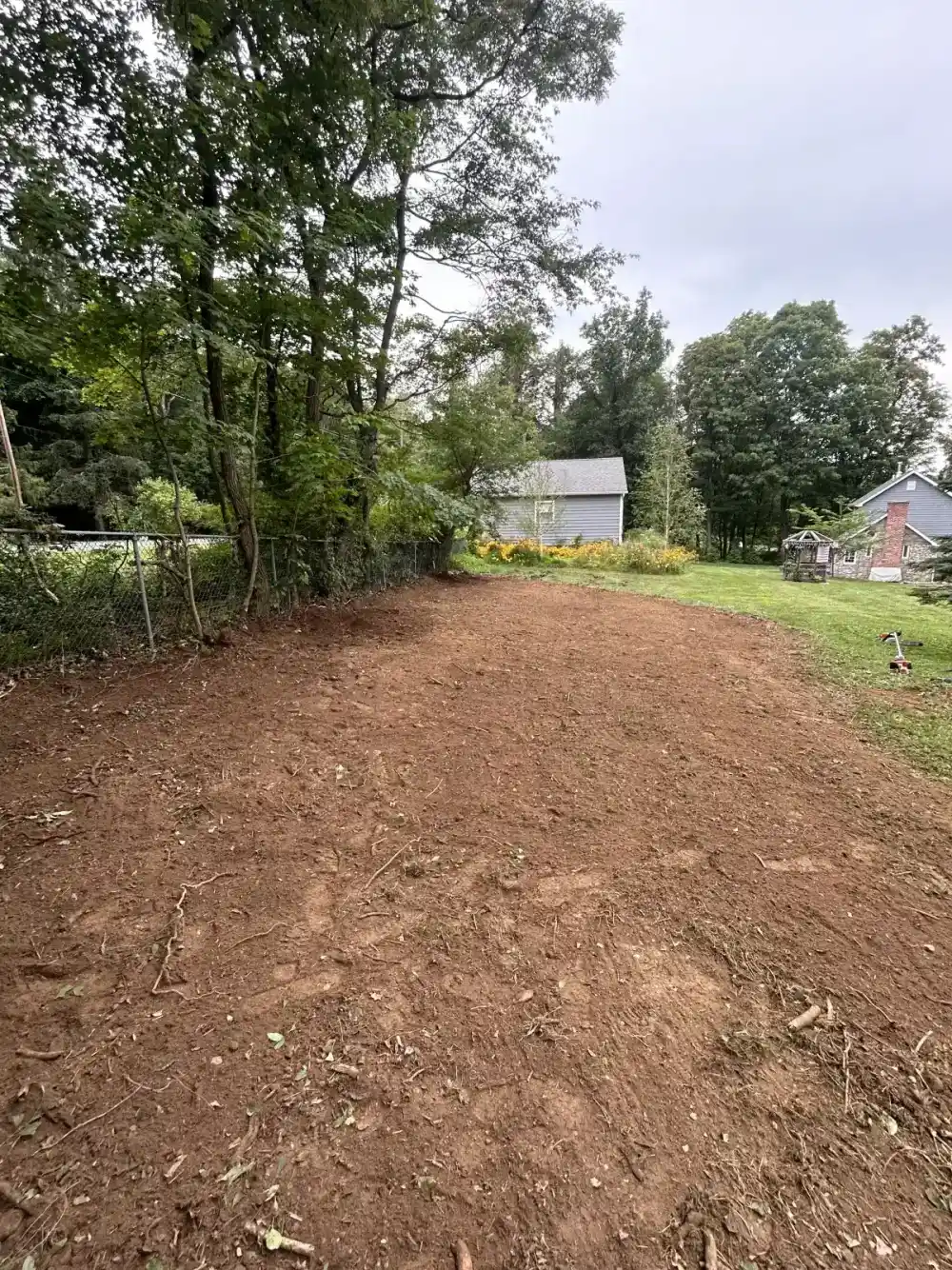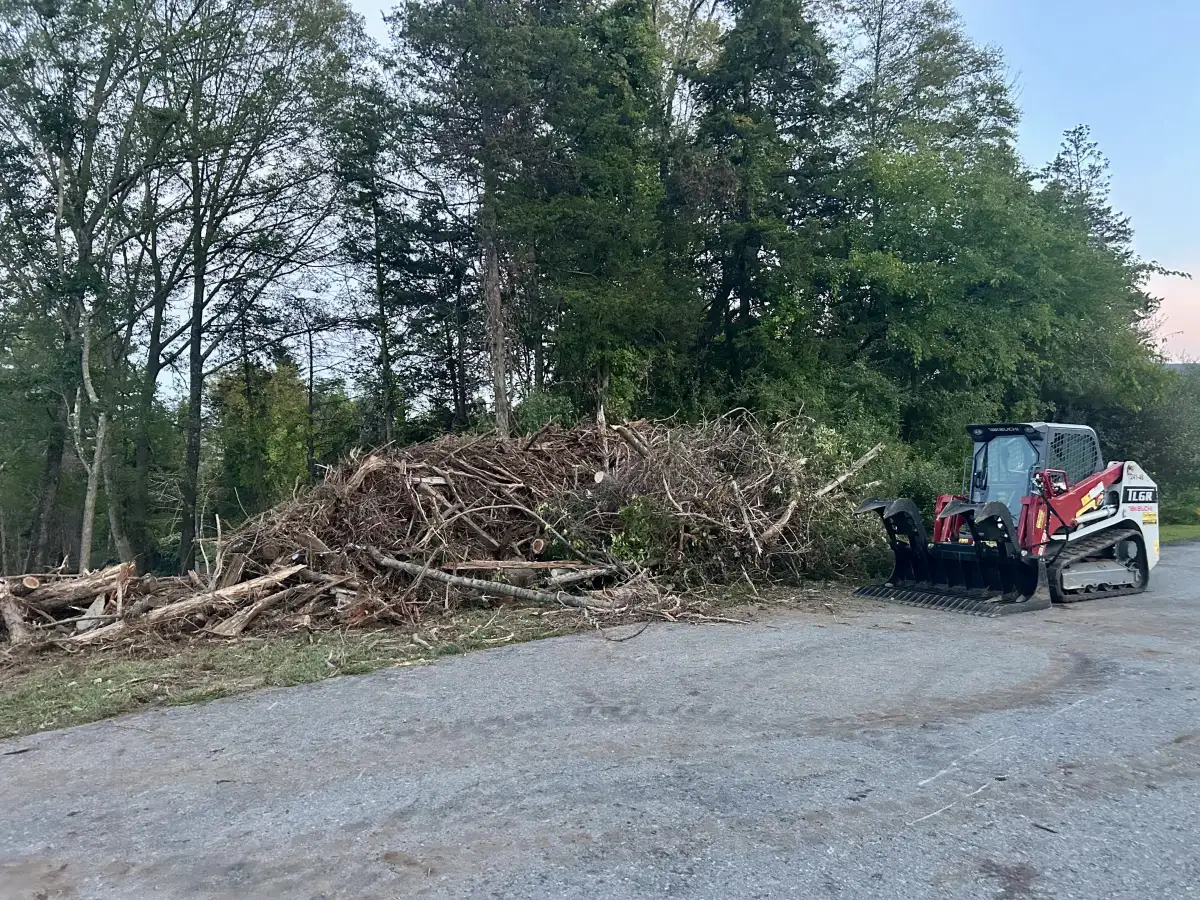
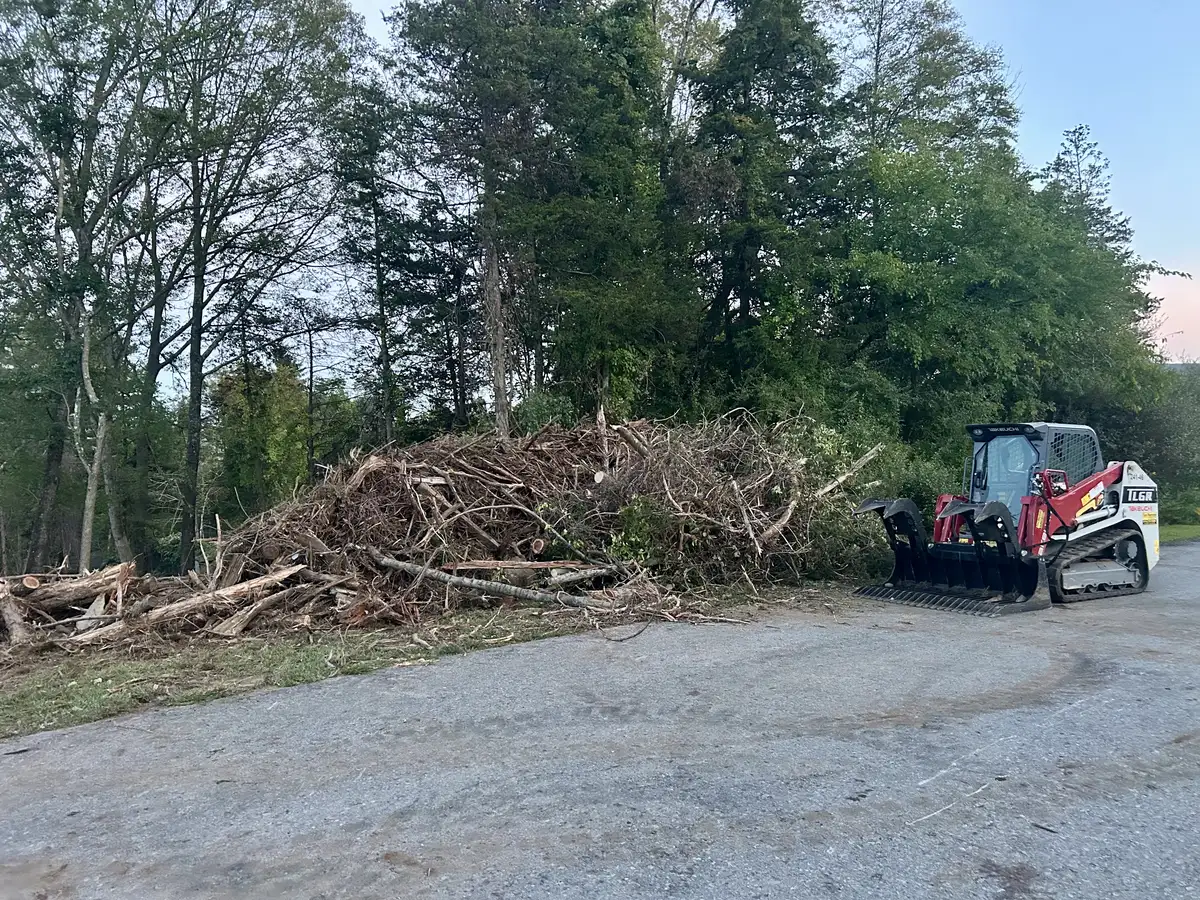
A tree removal price is really a plan for controlling weight, protecting what is below the canopy, moving equipment through the yard, and leaving the site in the condition you expect. That is why two 40-foot trees in Hopewell Junction can produce very different estimates. One may stand in an open, level area with easy truck access; the other may lean over a roof behind a narrow gate. The height is similar, but the labor, equipment, risk, and cleanup are not.
Tree Removal Cost Ranges: A Starting Point, Not a Quote
All American Lawn & Landscape currently publishes the following planning ranges for residential tree removal. Use them to understand the broad scale of a project—not to price a tree from a photo or tape-measure estimate alone.
| Tree or service | Published planning range | What can move the price |
|---|---|---|
| Small tree, under 30 ft | $300–$800 | Open drop zone versus controlled sectioning near buildings or utilities |
| Medium tree, 30–60 ft | $800–$2,500 | Trunk and crown size, condition, access, rigging, and debris volume |
| Large tree, 60–80 ft | $2,500–$5,000 | Heavy sections, limited landing space, structures, slopes, and equipment needs |
| Very large tree, over 80 ft | $5,000–$10,000+ | Complex controlled removal, reach, hazards, and extensive material handling |
| Stump grinding | $150–$500 per stump | Diameter, roots, access, grinding depth, and how the area will be finished |
These are planning ranges, not a promise that every tree in a height band will fit them. A written on-site estimate should connect the price to the tree, the removal method, the access route, and the requested finish work.
Why a 30-Foot Tree Can Cost More Than Expected
Homeowners often ask for a price based on height because it is easy to understand. Height matters, but a contractor also needs to see the tree’s diameter, crown spread, lean, condition, and surroundings. A compact tree in an open front yard may be straightforward. A smaller dead tree over a deck can require controlled cuts and careful lowering because brittle wood is less predictable and the landing area is limited.
For a tree around 30 feet, the site’s published $300–$800 small-tree range is a useful first reference. Expect the on-site price to change if the tree sits close to your house, fence, septic-related area, overhead line, neighboring property, or a slope. When electrical lines are involved, utility coordination may be necessary; do not assume a contractor can work around energized lines without a specific plan.
The Seven Details That Shape an Estimate
- Size and weight. Height, trunk diameter, crown spread, and the amount of wood and brush all affect cutting and handling.
- Tree condition. Dead, split, storm-damaged, hollow, or heavily leaning trees can require a different approach from sound trees in open areas.
- Targets below the canopy. Roofs, sheds, pools, patios, fences, plantings, driveways, and neighboring features reduce the usable drop zone.
- Equipment access. Gate width, driveway capacity, soft ground, slopes, retaining walls, and low branches influence which machines can reach the work.
- Removal method. Open felling can be simpler than taking the tree apart in sections and lowering pieces into a confined area.
- Material handling. Chipping brush, cutting firewood lengths, hauling logs, and removing every piece are different scopes.
- Stump and restoration choices. Grinding depth, surface roots, grindings removal, backfill, topsoil, seed, and final grading should be priced clearly.
What Dutchess County Site Conditions Can Change
Local cost is not simply a regional multiplier. The more useful local questions are about terrain, access, and what happens after removal. A wooded edge in Hopewell Junction may have room for equipment but more material to sort and haul. A tighter lot elsewhere in Dutchess County may require smaller equipment or more hand work. Steep grades can limit setup, while saturated or thawing ground can increase rutting risk and delay safe access.
Municipal rules and private-property restrictions can also vary. Before work begins, confirm who checks for permits, protected-tree rules, easements, or association requirements when they apply. Tell the estimator about known septic, irrigation, drainage, propane, invisible-fence, or other private features that may not appear in a standard utility mark-out.
Is There a Cheapest Season for Tree Removal?
There is no universally cheapest month. Scheduled removal is generally easier to price than emergency work because the site can be assessed and the crew and equipment can be planned. Leaf-off conditions may improve visibility and reduce leafy debris for some deciduous trees, but winter does not guarantee savings. Snow, ice, frozen access, short daylight, and severe weather can add constraints. Spring thaw or prolonged rain can make lawns and slopes too soft for the preferred equipment.
If the tree is not an immediate hazard, ask whether schedule flexibility would help. If you notice a fresh split, sudden lean, hanging limb, or storm damage near a home or traveled area, keep people away and seek an assessment rather than waiting for a lower seasonal price.
Compare the Scope, Not Just the Bottom Line
A low number is only useful when it covers the same result. Ask each company to identify the tree, removal approach, equipment route, protection plan, wood and brush handling, stump work, cleanup, restoration, and exclusions. Confirm whether logs stay, whether brush is chipped or hauled, how deep the stump will be ground, and what will fill the resulting area.
Also ask how unexpected conditions or added work will be approved. A complete written scope makes it easier to compare estimates without discovering later that stump grinding, hauling, or lawn repair was never included.
Get a Price Tied to Your Tree and Your Yard
The most reliable number comes from seeing the tree, the hazards around it, and the path equipment must take. Review All American Lawn & Landscape’s tree removal services for the available scope. If the project involves multiple trees, brush, or a larger site plan, see how land clearing differs from pricing one tree at a time.
For a site-specific estimate, call (845) 372-7768 or send the project details through the contact page. Include the number of trees, what they are near, the best access route, whether you want the wood removed, and what you want done with the stumps.
Tree Removal Cost Questions
All American Lawn & Landscape currently publishes a planning range of $300 to $800 for a small tree under 30 feet. A 30-foot tree can fall outside that range when it is dead, leaning, close to a house or utility, on a slope, or difficult to reach. An on-site estimate is the reliable way to price the complete removal.
There is no single dependable upstate New York average because height alone does not describe the work. All American’s current planning ranges run from $300 to $800 for trees under 30 feet to $5,000 to $10,000 or more for trees over 80 feet. Location, condition, access, rigging, debris handling, and stump work can move a specific estimate above or below a size-based range.
No season guarantees the lowest price. Scheduled work may cost less than emergency removal, and leaf-off conditions can simplify inspection or cleanup for some trees. Frozen, snowy, saturated, or soft ground can also limit safe access, so the least expensive timing depends on the tree, property, weather, and crew schedule.
Not always. Ask whether the estimate includes stump grinding, the intended grinding depth, surface-root work, grindings removal, backfill, topsoil, seed, and final grading. All American currently lists $150 to $500 per stump as a planning range based on stump diameter and root conditions.
A useful written estimate identifies the tree or trees, removal method, equipment access, property protection, wood and brush handling, stump work, cleanup, restoration, exclusions, and how changes will be approved. Confirm permit responsibility and coordination around utilities when either may apply.