
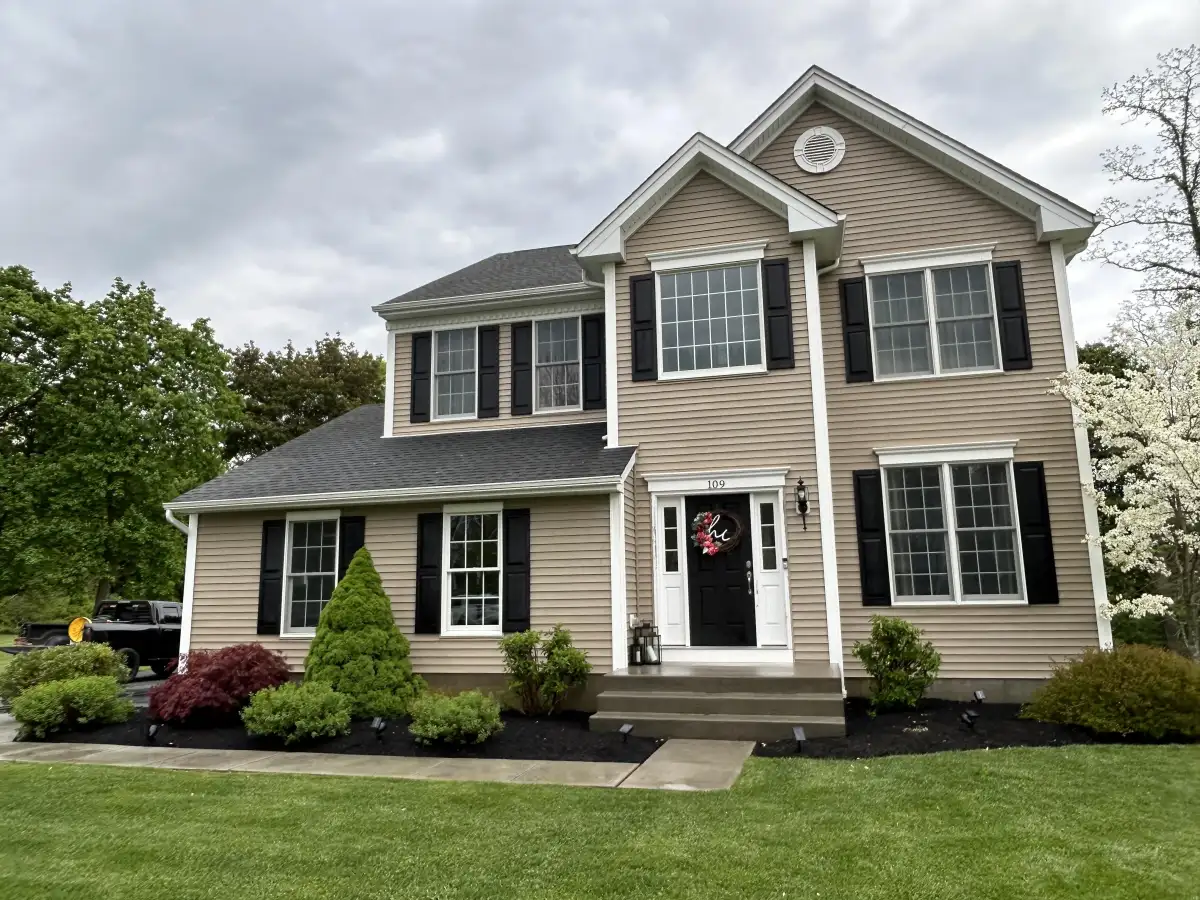
Pressure washing cost is not just a price per square foot. A one-story vinyl-sided home with open access is a different job from a two-story house with delicate trim, heavy organic buildup, foundation plantings, and tight side yards. The same is true for a level concrete driveway compared with stained pavers on a slope. A useful estimate identifies what will be cleaned, how it will be cleaned, and what needs protection before a price is attached.
Define the Surfaces Before Comparing Prices
A house wash, driveway cleaning, and gutter-exterior cleaning describe different work. Start with a list of the surfaces and their condition. Include access, stains, nearby planting and fixtures, water supply, and anything fragile or damaged that needs attention.
Ask each contractor to identify preparation, the intended cleaning method, protection, rinsing, and cleanup. A current estimate for the same scope is a more useful comparison than a national advertised figure that may cover different materials or conditions.
Why Square Footage Does Not Tell the Whole Story
Square footage is useful when it measures the surface being washed. A 1,200-square-foot home does not necessarily have 1,200 square feet of washable siding, and two homes with the same interior floor area may have different wall heights, additions, porches, dormers, or attached garages. For driveways and patios, the measured surface is more direct, but material and condition still matter.
A contractor may price by square foot, by project, by time, or by a combination of minimum service charge and measured scope. The important question is not which formula appears on the worksheet. It is whether the written estimate covers the same surfaces, preparation, treatment, rinsing, and cleanup you expect.
Six Factors That Change a Pressure Washing Estimate
- Surface material. Concrete, pavers, vinyl siding, brick, painted trim, wood, and fencing do not call for the same pressure or technique.
- Type of buildup. Loose dirt is different from algae, mildew, leaf staining, oil, rust, or paint failure. Some marks require treatment or may not fully clean away.
- Height and access. Stories, slopes, gates, narrow side yards, outdoor furniture, parked vehicles, and hose distance affect setup and working time.
- Protection and preparation. Plantings, outlets, open windows, loose siding, failing mortar, peeling paint, and paver joints need to be considered before cleaning begins.
- Water and runoff. Water-source availability and where wash water travels can change the setup. Downhill beds, storm drains, and neighboring surfaces deserve attention.
- Bundled surfaces. Washing a house, driveway, patio, and walkways together can reduce repeated setup, but each surface should still be listed clearly in the scope.
Soft Washing and Pressure Washing Should Not Be Priced as the Same Task
More pressure is not automatically a better cleaning method. Siding and other delicate exterior materials may call for lower pressure with an appropriate cleaning solution, while sound concrete or stone may tolerate a more direct approach. Wood, older mortar, painted surfaces, and paver joints require care because aggressive washing can scar, strip, or dislodge material.
That distinction belongs in the estimate. Ask what method is intended for each surface, what preparation is included, and whether existing damage could limit the result. Cleaning will not repair loose mortar, failed paint, damaged joints, or deteriorated wood.
How Long Should a House Wash Take?
A house’s interior floor area does not establish the length of a washing appointment. Setup, number of stories, water access, exterior material, buildup, plant protection, attached decks or walkways, and final rinsing all influence the schedule. A whole-property visit can take longer when the scope includes a driveway, patio, fence, or multiple surface types.
Weather matters too. Wind can make spray harder to control, and temperature affects how cleaning solutions behave. Ask whether the proposed timing fits the surfaces and conditions rather than choosing a month based only on an advertised seasonal price.
Compare Pressure Washing Quotes on the Same Scope
Before comparing totals, check that each quote identifies the surfaces, approximate area, cleaning method, stain or buildup treatment, plant and fixture protection, water source, runoff approach, furniture or vehicle movement, and cleanup. Confirm whether decks, steps, retaining walls, walkway edges, gutter exteriors, or detached structures are included or excluded.
All American Lawn & Landscape provides pressure washing for homes and outdoor surfaces across its service area. To get a price for your actual surfaces, call (845) 372-7768 or request an estimate through the contact page. Note what you want washed, the material, any problem stains, and whether access is limited.
Pressure Washing Cost Questions
A useful price covers the actual surfaces, measured area, buildup, access, cleaning method, protection work, and cleanup. Compare those inclusions across written estimates. A national advertised figure may describe different work and cannot establish the price for your Dutchess County property.
The measured driveway area is one input. Surface material, stains, condition, slope, edges, water access, protection, and adjoining surfaces also affect the cleaning scope. Send photos and approximate dimensions, then request a current estimate for the work included.
Interior floor area does not establish the washable exterior area. Stories, wall heights, additions, material, buildup, trim, access, and planting protection can change the work. Identify the actual surfaces and preparation in a written estimate for the house.
The appointment depends on the actual exterior surfaces, stories, setup, water access, buildup, protection, and rinsing required. Attached decks, paving, or additional buildings add separate work. Confirm the included surfaces and expected appointment length after the property is assessed.
No. Siding, painted surfaces, wood, mortar, pavers, and concrete do not all tolerate the same pressure or cleaning method. An estimate should identify the surfaces and describe where a lower-pressure wash, cleaning solution, or a more direct pressure-washing method is appropriate.