
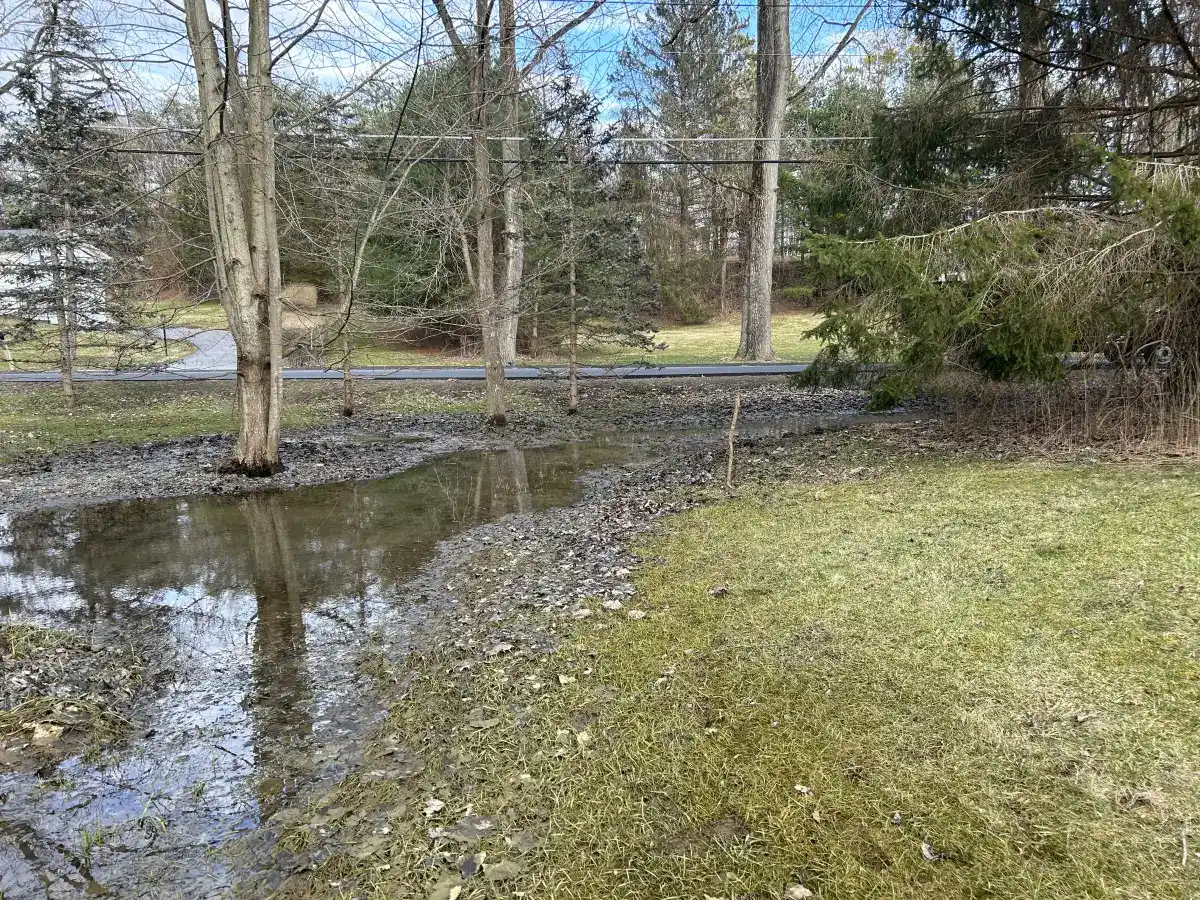
A wet yard is more than an inconvenience. Standing water kills grass, breeds mosquitoes, erodes soil, and can eventually damage your foundation. In Dutchess County, late May is often when homeowners first notice the full extent of their drainage problems. Spring rains have saturated the ground, snowmelt has raised the water table, and the yard that looked fine all winter is suddenly a swamp.
The good news is that virtually every wet yard in Dutchess County can be fixed. The solution depends on what is causing the problem -- poor grading, clay soils, a high water table, blocked drainage, or some combination of these. We install drainage systems across Hopewell Junction, Wappingers Falls, Beekman, Fishkill, and all of Dutchess County, and here is what we have learned from hundreds of properties.
Why Your Dutchess County Yard Holds Water
Before jumping to solutions, it helps to understand the root cause. In our experience, wet yards in Dutchess County fall into one of four categories, and most properties have a combination of these factors.
Heavy Clay Soil
Much of Dutchess County sits on glacial till with a high clay content. Clay soil absorbs water slowly and holds onto it for days or weeks after a storm. If you can squeeze a handful of wet soil from your yard into a ball and it holds its shape, you have a significant clay component. Sandy or loamy soils crumble apart. Clay soils in the Hudson Valley can take 4 to 8 times longer to drain than sandy soils, which is why a moderate rainstorm can leave puddles that persist for days.
Poor Grading
The ground around your house should slope away from the foundation at a rate of at least 1 inch per foot for the first 6 to 10 feet. Many older homes in Dutchess County have settled over the decades, and the grade has shifted so that water flows toward the house rather than away from it. In newer developments, the builder may have graded the lot correctly during construction, but years of landscaping, soil settling, and tree root growth have altered the original grade. A professional regrading corrects this problem permanently.
High Water Table
Properties along creek bottoms, in valley floors, and near the wetlands that dot Dutchess County often sit close to the water table. During spring, the water table can rise to within inches of the surface. In these situations, the water is not coming from above -- it is coming from below. Surface grading alone will not fix the problem. You need subsurface drainage that intercepts groundwater before it saturates your yard.
Blocked or Missing Drainage
Gutters that dump water at the foundation, downspouts that discharge into flower beds, crushed or disconnected underground pipes, and clogged footing drains all contribute to water problems. On older Dutchess County homes, the original footing drains may have been clay tile that has collapsed or filled with sedite over the past 40 to 60 years. When these systems fail, water has nowhere to go except into your basement or crawl space.
6 Proven Solutions for a Wet Yard
Here are the six drainage solutions we install most often in Dutchess County, ordered from simplest to most involved. Many properties benefit from a combination of two or three approaches.
1. Regrading and Surface Drainage
Regrading is the foundation of every drainage plan. If the ground does not slope correctly, no amount of pipe will fully solve the problem. We use a skid steer or compact excavator to reshape the terrain so water flows naturally to a designated discharge point -- typically the lowest corner of the property, a swale, or a storm drain connection.
Regrading also addresses low spots in the yard where water collects. Sometimes the fix is as simple as bringing in a few yards of topsoil and regrading a 20-by-30-foot area. Other times, the entire backyard needs to be reshaped. Cost range: $500 to $3,000 for spot grading; $3,000 to $8,000 for full-yard regrading.
2. French Drains
A French drain is a gravel-filled trench with a perforated pipe that collects and redirects subsurface water. It is the workhorse of residential drainage in the Hudson Valley. We install French drains along foundations, across yards, at the base of slopes, and anywhere water accumulates below the surface.
A proper French drain in Dutchess County includes a trench 12 to 24 inches wide and 18 to 36 inches deep, lined with filter fabric, filled with washed gravel, and fitted with a 4-inch perforated PVC or corrugated pipe. The pipe runs to daylight (an open discharge point) or to a dry well. We have installed French drain systems over 300 feet long on properties in Beekman and East Fishkill where the terrain demanded it. Cost range: $2,000 to $6,000 for a typical 50- to 100-foot run.
3. Dry Wells
A dry well is an underground chamber that collects stormwater and allows it to slowly percolate into the surrounding soil. Dry wells are ideal for properties where there is no good place to daylight a French drain or discharge pipe. They work well in combination with downspout connections and surface drains.
In Dutchess County, dry wells need to be sized based on local rainfall intensity and the contributing drainage area. A typical residential dry well for a 1,500-square-foot roof section uses a 50-gallon or larger leaching chamber buried 3 to 4 feet deep in a gravel bed. Cost range: $1,500 to $4,000 per well, installed.
4. Curtain Drains
A curtain drain (also called an interceptor drain) is similar to a French drain but is specifically designed to intercept groundwater flowing across a slope before it reaches your yard or foundation. It is installed uphill from the problem area, perpendicular to the flow of water.
We install curtain drains most often on properties in the hillier parts of Dutchess County -- Beekman, LaGrange, and the eastern towns where slopes direct water toward homes built partway down a hill. The curtain drain captures the water as it moves through the soil and redirects it to a safe discharge point. Cost range: $2,500 to $5,500 depending on length and depth.
5. Downspout Extensions and Underground Connections
Gutters and downspouts handle a surprising volume of water. A 1,500-square-foot roof generates roughly 935 gallons of runoff from just 1 inch of rain. If your downspouts dump that water right next to the foundation, the soil around your home is absorbing hundreds of gallons with every storm.
The fix is straightforward: connect downspouts to solid (non-perforated) underground pipes that carry the water at least 10 to 15 feet from the foundation, discharging to daylight or a dry well. This is one of the most cost-effective drainage improvements you can make. Cost range: $300 to $1,200 per downspout, installed with underground pipe.
6. Footing Drain Repair or Replacement
If water is entering your basement or crawl space, the problem may be a failed footing drain. Footing drains (also called perimeter drains or foundation drains) are installed alongside the footer during construction and are designed to intercept groundwater before it reaches the foundation wall. On homes built before the 1980s, these drains were often clay tile pipes that crack, collapse, or clog over time.
Replacing a footing drain is an excavation project. We dig down to the footer, remove the old drain, install a new perforated PVC pipe in a gravel bed with filter fabric, and apply waterproofing membrane to the foundation wall while it is exposed. This is a more involved and expensive project, but it is the definitive fix for chronic basement water. Cost range: $5,000 to $15,000 depending on the length of the affected area and depth of excavation.
How to Diagnose Your Yard's Drainage Problem
Before spending money on a solution, take 20 minutes during the next heavy rain to walk your property and observe where the water goes. Here is what to look for:
- Standing water within 10 feet of the foundation: This is the most urgent problem. Water pooling near the house can seep into the basement, damage the foundation, and undermine footings over time. Regrading and downspout corrections should be the first priority.
- Puddles that last more than 24 hours: Persistent puddles indicate clay soil, a high water table, or both. A French drain or dry well is usually the right solution.
- Water flowing from a neighbor's property or an uphill slope: A curtain drain installed at the property boundary (on your side) will intercept this water before it reaches your yard.
- Soggy areas along the sides of the house: Check whether the gutters are overflowing, whether downspouts are disconnected, or whether the grade slopes toward the house. These are often the easiest problems to fix.
- Erosion channels or washouts: These indicate concentrated water flow that needs to be managed. A combination of regrading, swales, and possibly a hardscaped channel or dry creek bed can redirect the flow without erosion.
When to Fix Drainage Problems
Late spring and summer are the best times to address yard drainage in Dutchess County. The ground is dry enough to excavate cleanly, the soil compacts properly, and you can observe water behavior during summer thunderstorms to confirm the fix is working before fall arrives.
Waiting until fall or winter is risky. Wet soil does not compact well, which means trenches for French drains and regraded areas may settle unevenly. Frozen ground makes excavation more expensive and less precise. And every season you wait is another season of water potentially reaching your foundation.
The one exception is footing drain work. While summer is preferred, we perform emergency footing drain repairs year-round when water is actively entering a basement.
DIY vs. Professional Drainage Work
Some drainage fixes are reasonable DIY projects. Extending a downspout with an above-ground pipe, adding soil to correct a minor grade issue near the house, or installing a small pop-up emitter are all manageable for a handy homeowner.
However, most meaningful drainage work requires professional equipment and expertise. Here is why:
- Grade accuracy matters. A French drain that does not maintain the correct slope (typically 1% minimum, or 1 inch of drop per 8 feet of run) will not drain. We use laser levels to set precise grades over long distances.
- Soil conditions vary. A French drain installed in clay soil without proper filter fabric will clog within 2 to 3 years. The gravel specification, pipe diameter, and fabric type all need to match local conditions.
- Discharge points are regulated. In Dutchess County, you cannot legally discharge concentrated stormwater onto a neighbor's property, into a road ditch without permission, or into a wetland buffer. A professional knows where and how to discharge legally.
- Excavation near utilities is dangerous. Underground electric, gas, water, and sewer lines are common in residential areas. We call 811 before every dig and know how to work around utility corridors safely.
Get a Free Drainage Assessment
If your Dutchess County yard turns into a swamp after every rain, you do not have to live with it. We will walk your property, identify the source of the water problem, and recommend the most cost-effective solution -- whether that is a simple regrading job, a French drain system, or a comprehensive drainage plan that addresses multiple issues at once.
We serve Hopewell Junction, Wappingers Falls, Beekman, Fishkill, East Fishkill, Poughkeepsie, LaGrange, and all of Dutchess County.
Ready to fix your wet yard? Request your free assessment or call us directly at (845) 372-7768.