

Late April is when Dutchess County properties wake up from winter, and what you do in the next few weeks sets the tone for how your yard looks through October. A proper spring cleanup goes well beyond raking leaves. It is a systematic inspection and restoration of your entire outdoor space: landscape beds, hardscape surfaces, drainage systems, exterior walls, and turf. Get it right now and you spend the summer enjoying your property instead of chasing problems that should have been caught in April.
Here is the complete spring landscape cleanup checklist we follow for our clients across Hopewell Junction, Wappingers Falls, Fishkill, and the rest of Dutchess County.
Step 1: Full Property Walkthrough and Winter Damage Assessment
Before you touch a rake, walk the entire property and take stock of what winter left behind. Hudson Valley winters are hard on landscapes. The freeze-thaw cycles, heavy snow loads, ice storms, and wind all take a toll that is not always obvious at first glance.
During your walkthrough, look for:
- Heaved pavers and stepping stones. Frost pushes pavers upward, creating trip hazards and uneven surfaces. Note any sections of your patio, walkway, or retaining wall that have shifted.
- Cracked or tilted retaining walls. Even well-built walls can move if water saturated the backfill before freezing. Small shifts now become structural problems by fall if ignored.
- Broken branches and storm damage. Check tree canopies for hanging limbs, split crotches, and branches resting on your roof or fence. These are safety issues, not cosmetic ones.
- Erosion and washouts. Look for areas where runoff has carved channels, displaced mulch, or exposed root systems. This is especially common on sloped properties in Beekman, East Fishkill, and LaGrange.
- Dead plantings. Some shrubs and perennials will not have survived the winter. Brown, brittle stems with no sign of new growth by late April usually mean the plant is gone.
Write down everything you find. This assessment drives the rest of your cleanup plan and helps you prioritize which tasks to tackle first.
Step 2: Debris Removal and Bed Clearing
This is the grunt work, but it matters. Start by removing all the debris that accumulated over winter: fallen branches, dead leaves, wind-blown trash, and any matted-down organic material sitting on your beds, lawn, and hardscape surfaces.
Pay special attention to landscape beds. Leaves that sat on beds all winter are compacted into a wet mat that smothers emerging perennials, traps moisture against plant crowns, and harbors fungal spores. Pull this material out carefully. Many spring-blooming perennials and bulbs are already pushing up shoots, and it is easy to snap them off if you rake too aggressively.
For beds with ornamental grasses, cut last year's growth down to about 4 to 6 inches before new green blades come up. Use hedge shears or a reciprocating saw for larger clumps. Do this before new growth reaches 6 inches, or you will end up cutting into the fresh blades and leaving the plant looking ragged all season.
Step 3: Pruning and Deadwood Removal
Late April is an excellent pruning window for most Dutchess County shrubs and trees, with one important exception: do not prune spring-flowering shrubs (forsythia, lilac, azalea, rhododendron) until after they finish blooming. Cutting these now removes the flower buds and you lose the entire spring display.
What to Prune Now
- Summer-flowering shrubs like butterfly bush, rose of Sharon, and hydrangea paniculata. These bloom on new wood, so pruning now encourages vigorous new growth.
- Dead, damaged, or crossing branches on any tree or shrub. This is always appropriate regardless of species.
- Overgrown foundation plantings that are blocking windows, encroaching on walkways, or growing into siding. Reshape these before the growing season fills them out.
- Ornamental trees. Remove suckers, water sprouts, and any branches growing inward toward the trunk.
What to Wait On
- Forsythia, lilac, azalea, and rhododendron. Prune immediately after they finish flowering, typically late May in Dutchess County.
- Oak trees. Avoid pruning from April through July to reduce the risk of oak wilt transmission. Winter pruning is safer.
Always use sharp, clean tools. Dull blades crush stems and create jagged cuts that invite disease. Disinfect your pruners with rubbing alcohol between plants, especially if you are removing anything that looks diseased.
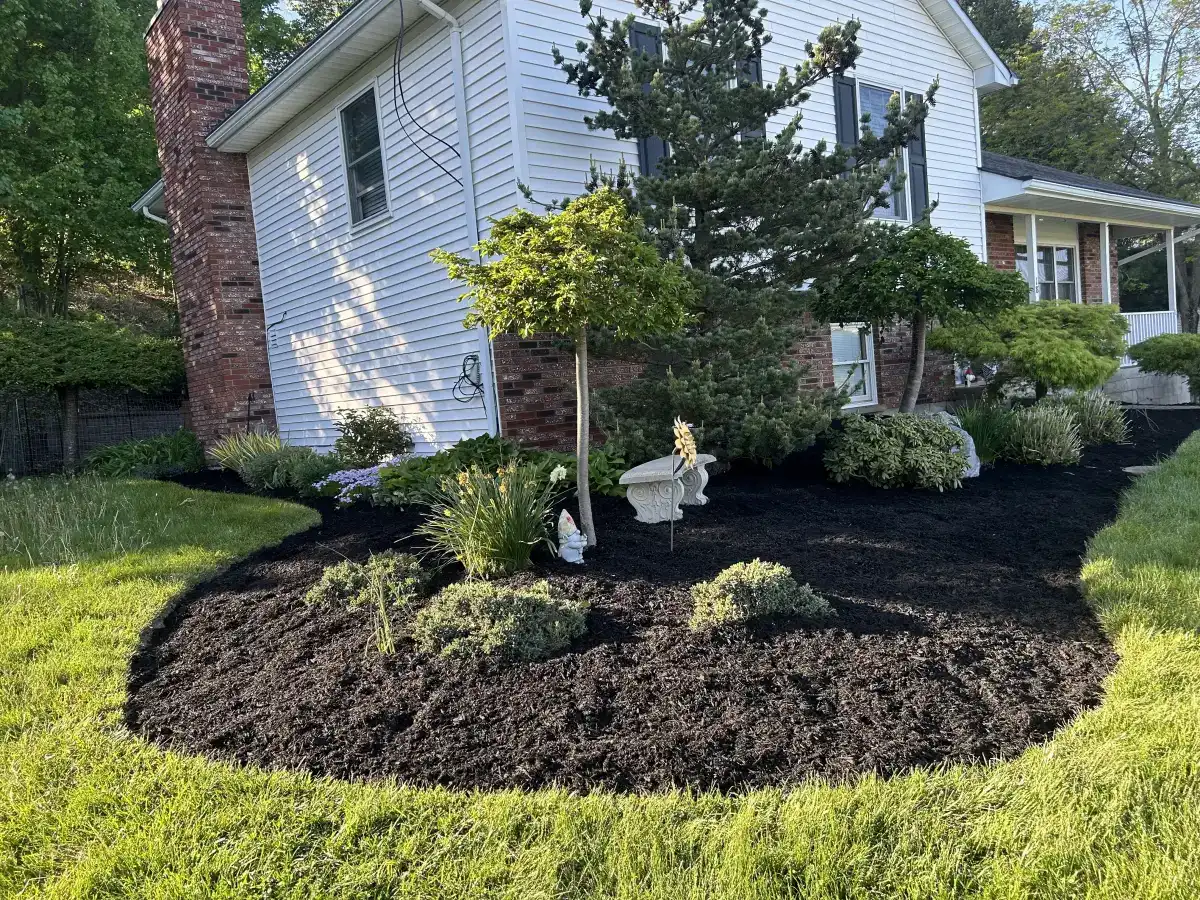
Step 4: Edge Beds and Refresh Mulch
Crisp bed edges make the biggest visual difference of any single cleanup task. Over winter, turf creeps into beds and edge lines blur. Re-cut all bed edges with a flat spade or mechanical edger to redefine the boundary between lawn and bed.
Once edges are cut, it is time for fresh mulch. In the Hudson Valley, double-shredded hardwood is the most popular choice. It holds color well, stays in place on slopes better than single-shredded, and breaks down slowly enough to last through the season.
Mulching Best Practices
- Apply 2 to 3 inches of mulch. Less than 2 inches does not suppress weeds effectively. More than 4 inches suffocates roots and creates rodent habitat.
- Pull mulch away from tree trunks and shrub bases. The "mulch volcano" piled against a trunk is one of the most common landscaping mistakes in Dutchess County. It traps moisture against bark, promotes rot, and attracts boring insects. Leave a 3-inch gap between mulch and any woody stem.
- Do not mulch over wet, matted leaves. If old leaf litter is still sitting in the bed, remove it first. Burying it under fresh mulch creates a fungal layer and prevents water from reaching roots.
- Consider timing. Mulch after the soil has warmed slightly. Mulching too early over cold soil slows the warming process and delays perennial emergence. In Dutchess County, late April through mid-May is usually the sweet spot.
For a typical Dutchess County property with 500 to 800 square feet of bed area, plan on 5 to 8 cubic yards of mulch. We deliver and spread it as part of our landscaping services so you do not need to haul bags from the hardware store.
Step 5: Inspect and Clean Drainage Systems
Spring snowmelt and rain put your drainage systems to the test. If water pooled in your yard, seeped into your basement, or backed up around your foundation this winter, your drainage needs attention before the heavy spring rains arrive.
Here is what to check:
- French drains and curtain drains. Clear any debris from the inlet and outlet points. If you have cleanout ports, flush them with a garden hose to confirm water flows freely through the pipe. Slow flow usually means sediment buildup or root intrusion. Check our French drain installation guide if you suspect your system needs repair or replacement.
- Downspout extensions and splash blocks. Make sure they are still directed away from the foundation. Frost heave moves splash blocks, and extensions get knocked loose over winter.
- Catch basins and dry wells. Remove accumulated leaves and sediment from grates and basins. A clogged catch basin sends water exactly where you do not want it.
- Grading around the foundation. The soil directly against your foundation should slope away at a rate of at least 1 inch per foot for the first 6 feet. Winter settlement often reverses this grade, directing water toward the house instead of away from it.
Drainage issues rarely fix themselves. If you noticed water problems this winter, address them now before the ground becomes too saturated to work. We offer complete drainage solutions including French drains, footing drains, dry wells, and regrading.
Step 6: Hardscape Inspection and Maintenance
Your patio, walkways, retaining walls, and steps all took a beating from freeze-thaw cycles. Now is the time to make repairs before small issues become expensive ones.
Pavers and Flagstone
Check for heaved, sunken, or loose units. Individual pavers that have shifted can usually be pulled up, the base re-leveled, and the paver reset. If polymeric sand has washed out from the joints, re-sand and seal before weeds take hold in the gaps.
Retaining Walls
Look for bulging, leaning, or cracked blocks. Small movements can sometimes be corrected by resetting a few courses. Significant leaning usually indicates a failure of the drainage aggregate behind the wall and may require partial rebuilding. Read our retaining wall guide for more on identifying and addressing wall problems.
Concrete
Seal cracks before water enters and causes further freeze damage next winter. For larger cracks or heaved sections, you may need professional concrete repair or removal.
Step 7: Pressure Wash Exterior Surfaces
After an entire winter of moisture, the exterior of your home, driveway, patio, and fencing are probably coated in a layer of green algae, mold, and grime. Pressure washing is the fastest way to restore these surfaces and it makes your entire property look dramatically better in a single afternoon.
Focus on these areas during your spring wash:
- House siding. Use soft wash (low pressure with cleaning solution) for vinyl, wood, and stucco. High pressure can force water behind siding and damage paint.
- Driveway and walkways. High-pressure cleaning removes oil stains, tire marks, moss, and winter salt residue from concrete and pavers.
- Patio and deck. Restore your outdoor living areas before you bring furniture out for the season.
- Fencing. Wood and vinyl fences accumulate algae on the north-facing side especially. A thorough cleaning can make a five-year-old fence look almost new.
Professional-grade equipment makes a significant difference compared to a consumer pressure washer from the hardware store. The combination of higher flow rate, proper cleaning solutions, and experience knowing which pressure setting to use on each surface type means better results without surface damage.
Step 8: Lawn Cleanup and First Mow
If you have not already started your spring lawn care routine, now is the time. By late April in Dutchess County, most lawns are actively growing and need attention.
The quick version: rake up any remaining debris, mow at 3 to 3.5 inches on your first cut, and assess whether you need overseeding, aeration, or weed treatment. Our detailed spring lawn care guide covers the full month-by-month timeline including fertilizer timing, crabgrass prevention, and dealing with clay soil.
For lawns that are mostly weeds or bare dirt, spring overseeding or a full new lawn installation may be the better investment. Patching a lawn that is more than 50 percent gone rarely produces good results.
Step 9: Plan New Plantings and Hardscape Projects
Spring cleanup often reveals opportunities. That bare corner where the boxwoods died. The slope that keeps washing out. The patio you have been thinking about for three years. Late April and early May are prime time in Dutchess County for both new plantings and hardscape construction.
For new plantings, the cooler spring temperatures and regular rainfall help root establishment. Choose species that are proven performers in USDA Zone 6a. Native plants like inkberry holly, serviceberry, and switchgrass are low-maintenance options that thrive without constant watering once established.
For hardscape projects like new patios, walkways, or retaining walls, getting started in spring means your project is finished and ready to enjoy by summer. We book up quickly during peak season, so earlier is better if you are planning anything significant.
Your Spring Cleanup Checklist at a Glance
- Full property walkthrough -- note winter damage, erosion, dead plants
- Debris removal -- clear beds, lawn, and hardscape surfaces
- Pruning -- deadwood, summer-bloomers, overgrown foundation plants
- Edge beds and mulch -- 2 to 3 inches, no mulch volcanoes
- Drainage inspection -- French drains, downspouts, catch basins, grading
- Hardscape check -- pavers, walls, concrete, re-sand joints
- Pressure wash -- siding, driveway, patio, fencing
- Lawn care -- first mow, assess turf condition, plan treatments
- Plan new projects -- plantings, patios, drainage solutions
Skip the Checklist and Hire Us Instead
A full spring landscape cleanup is a big job, especially on larger Dutchess County properties. If you would rather spend your weekend doing something other than raking, pruning, and hauling mulch, we handle the entire process from start to finish.
We offer standalone spring cleanups as well as complete property makeovers that combine cleanup, new landscaping, hardscaping, drainage, and pressure washing into a single project. One crew, one point of contact, and your property is ready for summer.
Ready to get your property cleaned up this spring? Request a free estimate or call us at (845) 372-7768. We serve Hopewell Junction, Wappingers Falls, Fishkill, Beekman, East Fishkill, Poughkeepsie, LaGrange, and all of Dutchess County.