
After a long Dutchess County winter, your lawn needs attention before the growing season kicks in. The transition from dormant turf to a thick, healthy lawn does not happen on its own. Spring is when you set the foundation for the entire year, and getting the timing right matters more than most homeowners realize. Here is a practical, month-by-month guide to spring lawn care that is tailored specifically to the climate and soil conditions in Dutchess County and the Hudson Valley.
Late March: Spring Cleanup Comes First
Do not rush out to work on your lawn the first warm day in March. In Dutchess County, late-season frost is common well into the month, and the ground is often still saturated from snowmelt. Walking on waterlogged turf compacts the soil and damages grass crowns.
Once the ground has firmed up and temperatures are consistently above freezing at night, start with a thorough spring cleanup:
- Remove debris. Rake up fallen branches, leaves, and any other material that accumulated over winter. Matted leaves smother grass and create conditions for snow mold.
- Clear drainage paths. Check your downspout extensions, swales, and any drainage systems to make sure water is flowing away from your foundation and not pooling on the lawn.
- Assess winter damage. Look for bare spots, ruts from plows or foot traffic, and areas where the turf looks thin or discolored. These are the spots you will address with overseeding later.
Early April: The First Mow and Dethatching
Your first mow of the season should happen when the grass reaches 3 to 4 inches in height, which in Dutchess County usually means early to mid-April. Set your mower blade high for this first cut. Mowing to about 3 inches removes the dead tips without stressing the plant as it comes out of dormancy.
This is also the time to evaluate your thatch layer. Thatch is the layer of dead roots, stems, and debris that builds up between the soil surface and the green grass blades. A thin thatch layer (under half an inch) is actually beneficial. It insulates roots and retains moisture. But when thatch exceeds three-quarters of an inch, it blocks water, air, and fertilizer from reaching the soil.
If your lawn has a thick thatch layer, dethatch before doing anything else. A power dethatcher or dethatching rake pulls the dead material to the surface where you can rake it up. This opens the canopy and allows your spring treatments to actually reach the soil where they are needed.
Mid-April: Aeration and Overseeding
Core aeration is one of the most valuable things you can do for a Dutchess County lawn. Our local soil is predominantly clay-based, especially in areas like Hopewell Junction, Beekman, East Fishkill, and Wappingers Falls. Clay soil compacts easily, which restricts root growth and limits how well water and nutrients penetrate the surface.
Core aeration pulls small plugs of soil out of the ground, creating channels for air, water, and roots. Leave the plugs on the surface. They break down within a week or two and return organic matter to the lawn. For heavy clay soil, aerate every spring and fall if possible.
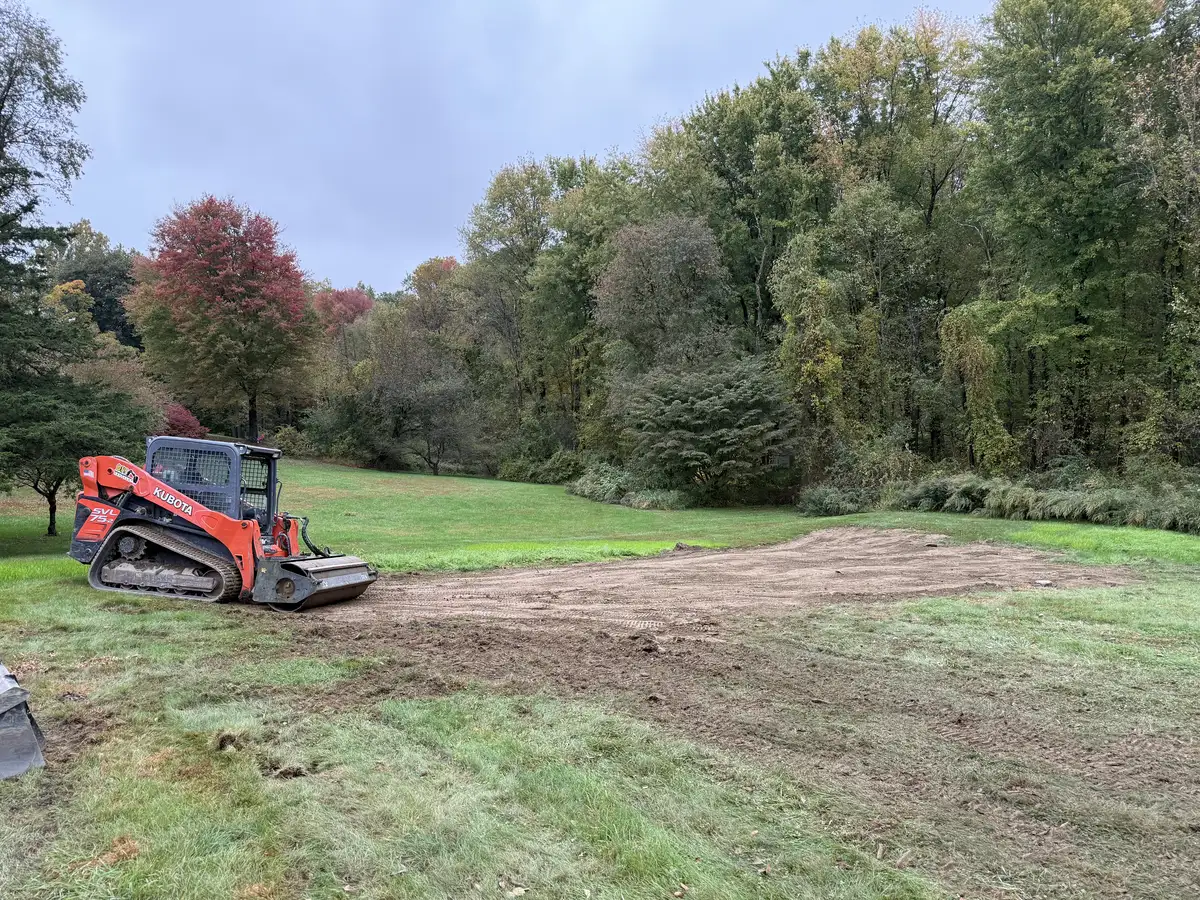
After aeration is the perfect time to overseed bare or thin spots. The holes from aeration give grass seed direct contact with the soil, which dramatically improves germination rates. Use a cool-season grass mix appropriate for the Hudson Valley. A blend of Kentucky bluegrass, perennial ryegrass, and fine fescue handles our temperature swings and partial shade conditions well.
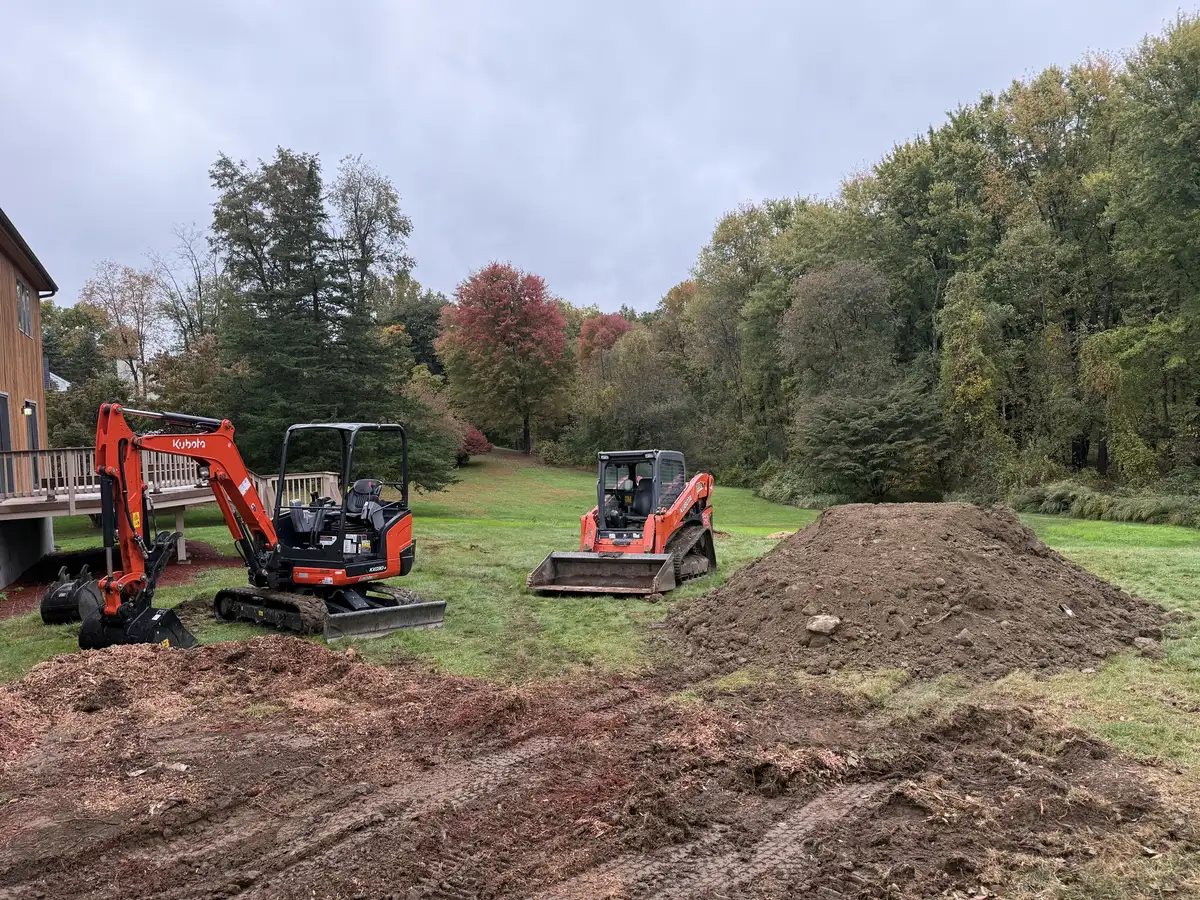
For larger bare areas or lawns that are more than 50 percent weeds or dead grass, a full new lawn installation may be more cost-effective than trying to patch. We can evaluate your situation and recommend whether overseeding or a complete renovation makes more sense.
Fertilizer Timing: Wait for Soil Temperature
One of the most common spring lawn care mistakes is fertilizing too early. Applying fertilizer before the grass is actively growing wastes product and can actually feed weeds instead of your lawn.
The rule of thumb is to wait until the soil temperature reaches 55 degrees Fahrenheit at a depth of 4 inches. In Dutchess County, this typically happens in late April to early May. You can check soil temperature with an inexpensive probe thermometer or monitor local agricultural reports from the Cornell Cooperative Extension.
Use a slow-release granular fertilizer for your first application. A balanced formula or one slightly higher in nitrogen (the first number on the bag) encourages strong green growth without pushing the lawn too fast. Avoid quick-release synthetic fertilizers in spring. They cause a surge of top growth at the expense of root development, and the lawn crashes once the nitrogen runs out.
Pre-Emergent Crabgrass Control
Crabgrass is one of the most persistent lawn weeds in Dutchess County, and the only effective way to deal with it is to prevent it from germinating in the first place. Pre-emergent herbicide creates a chemical barrier in the top layer of soil that stops crabgrass seeds from sprouting.
Timing is critical. You need to apply pre-emergent before soil temperatures reach 55 degrees for several consecutive days, which is when crabgrass starts to germinate. In most of Dutchess County, the window is mid-April to early May. A common guideline is to apply when forsythia bushes finish blooming and the flowers start to drop.
Important note: Pre-emergent herbicide prevents all seeds from germinating, including grass seed. If you plan to overseed bare spots, do that first and skip the pre-emergent in those areas. You cannot seed and apply pre-emergent to the same spot at the same time.
Dealing with Dutchess County Clay Soil
Clay soil is the defining challenge of lawn care in Dutchess County. It holds water when wet, creating soggy conditions that promote fungal disease. When it dries out, it cracks and hardens, making it nearly impossible for roots to penetrate. This cycle of waterlogging and compaction is why so many lawns in our area struggle.
Here is how to improve clay soil over time:
- Aerate annually (or twice a year for severely compacted lawns). This is the single most effective treatment for clay soil compaction.
- Topdress with compost. After aerating, spread a quarter-inch layer of quality compost over the lawn. It works into the aeration holes and gradually improves soil structure. Over several seasons, this builds organic matter that helps clay drain better.
- Address drainage issues. If water pools on your lawn for more than 24 hours after rain, you likely need a drainage solution. A French drain, dry well, or regrading can redirect water before it saturates the soil.
- Avoid overwatering. Clay holds moisture far longer than sandy or loamy soil. Water deeply but infrequently, and only when the lawn actually needs it.
Mowing Height and Frequency Through Spring
Proper mowing is the most underrated lawn care practice. The height at which you mow has a direct impact on root depth, weed suppression, and drought tolerance.
For cool-season grasses in Dutchess County, keep your mowing height between 3 and 3.5 inches throughout the spring and summer. Taller grass shades the soil, which reduces weed germination, retains moisture, and encourages deeper root growth. Never remove more than one-third of the grass blade in a single mowing. If your lawn gets ahead of you during a rainy stretch, raise the mower deck and make two passes a few days apart rather than scalping it down in one cut.
As spring progresses and growth accelerates, you may need to mow every 5 to 7 days. Keep your mower blades sharp. Dull blades tear the grass instead of cutting it cleanly, leaving ragged edges that turn brown and invite disease.
New Lawn Installation vs. Overseeding
If your lawn is more than half weeds, has extensive bare patches, or the existing turf is a mix of undesirable grass species, overseeding alone may not be enough. A complete lawn renovation involves removing the old turf, amending the soil, grading the surface, and installing fresh seed or sod.
Spring is a workable time for new lawn installation in Dutchess County, though early fall (late August through September) is generally the ideal window because cooler temperatures and reliable rainfall favor seed establishment. If you need a new lawn this spring, plan for regular watering through the summer months to keep new seedlings alive during July and August heat.
Whether you are overseeding thin spots or starting fresh, soil preparation is what separates success from failure. Seed dropped onto compacted clay without any prep will struggle to germinate and is unlikely to establish strong roots.
Your Spring Lawn Care Checklist
Here is a quick-reference timeline for Dutchess County homeowners:
- Late March: Spring cleanup, debris removal, drainage check
- Early April: First mow (3-4 inches), dethatch if needed
- Mid-April: Core aerate, overseed bare spots
- Late April to early May: Apply pre-emergent crabgrass control (skip overseeded areas)
- Early May: First fertilizer application (soil temp 55 degrees or above)
- Ongoing: Mow at 3 to 3.5 inches, sharpen blades, water deeply and infrequently
Get Professional Help With Your Spring Lawn
Not every lawn care task is a weekend DIY project, especially when you are dealing with compacted clay soil, drainage problems, or a lawn that needs a complete restart. We handle everything from routine lawn maintenance and overseeding to full lawn installations, aeration, and drainage corrections.
Ready to get your lawn in shape this spring? Request a free estimate or call us at (845) 372-7768. We serve Hopewell Junction, Wappingers Falls, Fishkill, Beekman, Poughkeepsie, and all of Dutchess County.