
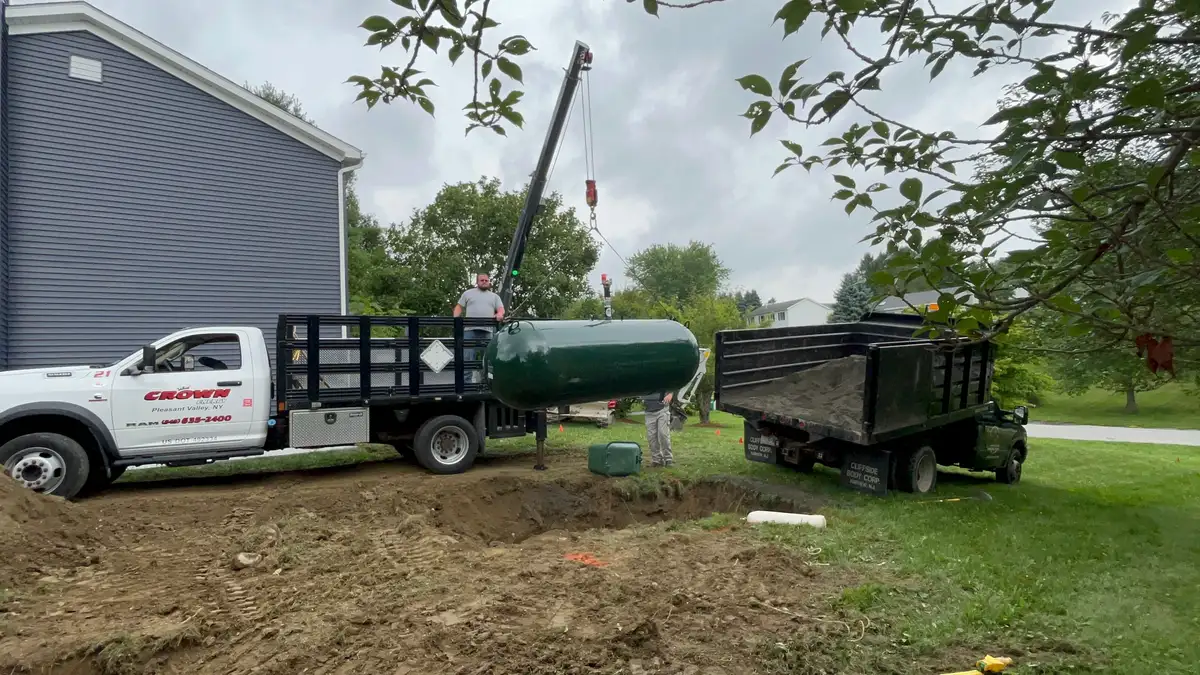
Many Dutchess County homes, especially rural properties in Beekman, Pawling, East Fishkill, and the surrounding townships, rely on propane for heating, cooking, and hot water. If you are building a new home, converting from oil, or replacing an aging tank, understanding the propane tank installation process can save you time, money, and headaches. Here is a practical guide covering tank types, sizes, permits, and what to expect from start to finish.
Above-Ground vs. Underground Propane Tanks
The first decision you will face is whether to install your tank above ground or below ground. Each option has trade-offs, and the right choice depends on your property, budget, and personal preference.
Above-Ground Tanks
Above-ground tanks are the more common and more affordable option. They sit on a concrete pad or a set of concrete blocks and are visible on your property. Here are the main advantages:
- Lower installation cost: No excavation is required, which significantly reduces labor and equipment expenses.
- Easier maintenance and inspection: Because the tank is fully exposed, your propane company and inspectors can easily check the tank, regulator, and connections for leaks or corrosion.
- Faster installation: Most above-ground installations can be completed in a single day.
- Easier to replace: When the tank eventually reaches end of life (typically 30+ years), swapping it out is straightforward.
The main drawback is aesthetics. A 500-gallon tank is roughly 10 feet long and 3 feet in diameter, and it sits in plain view unless you screen it with landscaping or fencing. Sun exposure is also a consideration. Tanks in direct sunlight build higher internal pressure on hot summer days, which can trigger the pressure relief valve. Positioning the tank in a partially shaded location or on the north side of a structure helps.
Underground Tanks
Underground tanks are buried below grade with only the fill valve, regulator, and a small access dome visible at the surface. The benefits include:
- Completely hidden: The tank is out of sight, which is ideal for properties where appearance matters or where HOA rules restrict above-ground tanks.
- Protected from weather: Underground tanks are insulated by the surrounding soil, so they maintain a more consistent temperature year-round.
- No damage risk from falling trees or debris: A concern in wooded areas of Dutchess County, especially during winter storms.
The downsides are higher installation cost (excavation, backfill, and cathodic protection add up), more involved inspections, and the potential for corrosion over time if the protective coating or anode system fails. Underground tanks also require cathodic protection, usually a sacrificial anode bag, to prevent the steel tank from corroding in contact with moist soil.
Choosing the Right Tank Size
Propane tanks come in several standard sizes, and the right one depends on how many appliances you are running and the square footage of your home:
- 120-gallon tank: Suitable for a single appliance such as a gas range, fireplace, or pool heater. Common for homes that use propane as a supplemental fuel rather than the primary heat source.
- 250-gallon tank: Works for smaller homes (under 1,500 square feet) using propane for heat and hot water, or for larger homes using propane for cooking and a backup generator only.
- 500-gallon tank: The most popular residential size in Dutchess County. Handles whole-home heating, hot water, cooking, and a dryer for a typical 2,000 to 3,000 square foot home. Most propane companies will deliver to a 500-gallon tank without requiring a minimum delivery.
- 1,000-gallon tank: Designed for larger homes (3,500+ square feet), homes with high propane usage (heated pools, large standby generators), or properties where you want fewer deliveries per year. A 1,000-gallon tank is roughly 16 feet long and almost always installed underground.
Your propane supplier can calculate your expected annual usage based on the appliances you plan to connect and your home's heating load. Oversizing slightly is generally better than undersizing, since running out of propane mid-winter means a cold house and an expensive emergency delivery.
Setback Requirements and Fire Code Distances
New York State follows NFPA 58 (Liquefied Petroleum Gas Code) for propane tank placement. These setback distances dictate how far the tank must be from buildings, property lines, and ignition sources. The minimum distances vary by tank size:
- Tanks up to 125 gallons: Minimum 10 feet from buildings, property lines, and sources of ignition.
- Tanks 125 to 500 gallons: Minimum 10 feet from buildings, property lines, and ignition sources. Must also be at least 10 feet from any window or door below the level of the tank relief valve.
- Tanks 501 to 2,000 gallons: Minimum 25 feet from buildings and property lines.
These are the baseline distances. Your local town code or fire district may impose additional requirements, and the propane delivery company will verify clearances before filling the tank for the first time. On smaller lots, setback requirements can limit where the tank can go, which is another reason some homeowners choose underground installation.
Permits and Local Requirements
Many towns in Dutchess County require a building permit for permanent propane tank installations, particularly for tanks over 125 gallons. The specific requirements vary by municipality:
- The Town of East Fishkill, Town of Beekman, Town of Fishkill, and Town of Wappinger all have building departments that oversee propane tank installations.
- Underground tank installations almost always require a permit because they involve excavation and may affect site drainage or utility clearances.
- Above-ground tanks may or may not require a permit depending on the town, but the propane supplier typically will not fill a tank that has not been inspected and approved.
- If your installation requires running a new gas line into the house, a separate plumbing or mechanical permit may be needed.
Before starting any propane tank project, contact your local building department to confirm what permits are needed. We handle the coordination as part of our propane tank installation service, so you do not have to chase down the paperwork yourself.
Underground Installation: What the Excavation Involves
Installing a propane tank underground is primarily an excavation project. Here is what the process looks like:
- Site layout and utility marking. The tank location is staked out based on setback requirements, and all underground utilities are marked (calling 811 is required by New York law before any excavation).
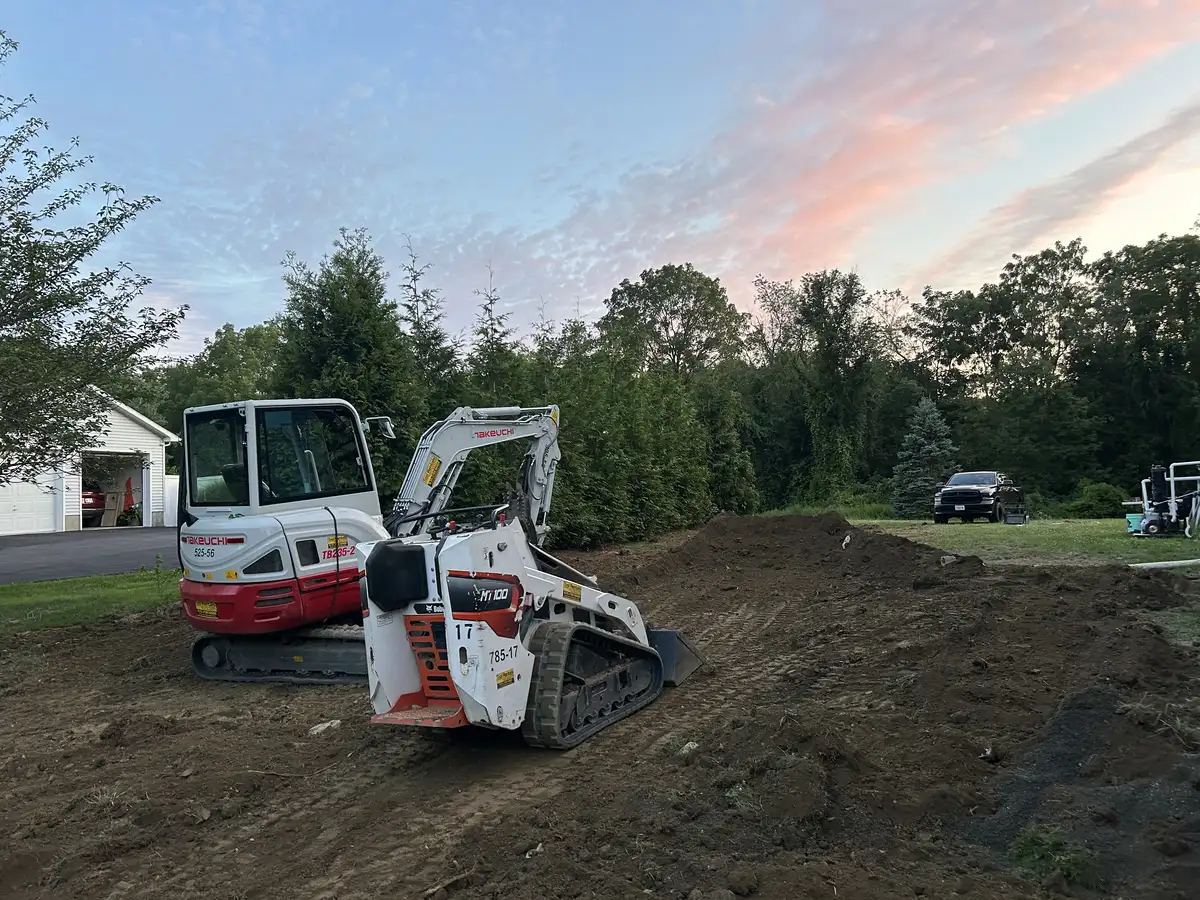
- Excavation. The hole is dug to accommodate the tank with a minimum of 12 inches of cover over the top. For a 500-gallon tank, the hole is typically 5 feet deep, 4 feet wide, and 12 feet long. In rocky Dutchess County soil, this often requires a hydraulic excavator rather than a backhoe.
- Bedding preparation. The bottom of the excavation is leveled and filled with 6 inches of pea gravel or clean sand to create a stable, well-drained bed for the tank to rest on. Some installations use a concrete pad instead.
- Tank placement. The tank is lowered into the hole with the excavator. It must be positioned so the fill valve, gauge, and regulator are accessible from the surface.
- Cathodic protection. A sacrificial anode bag (typically magnesium) is attached to the tank and buried in the backfill. This protects the steel tank from galvanic corrosion in moist soil.
- Backfill and compaction. The tank is backfilled with clean fill, compacted in lifts to prevent settling. The top is graded to match the surrounding lawn and seeded or sodded.
The entire excavation and tank placement typically takes one day. If your property has ledge rock close to the surface, which is common in eastern Dutchess County, the excavation may take longer and cost more due to rock breaking or removal.
Above-Ground Installation Process
Above-ground installation is simpler but still requires proper site preparation:
- Concrete pad: The tank needs a level, stable surface. A poured concrete pad or precast concrete blocks are the standard options. The pad should be slightly larger than the tank footprint.
- Ventilation and clearance: The tank must not be placed in an enclosed space or against a wall. Adequate air circulation around the tank is required for safety and to allow the pressure relief valve to vent if needed.
- Anchoring: In areas prone to flooding or on sloped terrain, the tank may need to be strapped or bolted to the pad to prevent it from shifting.
- Sun exposure: Positioning the tank where it gets afternoon shade (north or east side of a building) reduces heat buildup in summer. A tank that is consistently in full sun may vent propane through the relief valve on the hottest days.
Gas Line Connection to the House
Once the tank is in place, a gas line connects it to your home's appliances. This work must be performed by a licensed plumber or gas fitter. The typical process includes:
- Line material: Underground gas lines from the tank to the house are usually high-density polyethylene (HDPE) pipe, which is flexible, corrosion-resistant, and rated for buried use. Above-ground connections at the house use copper tubing or black iron pipe.
- Pressure testing: Before any gas flows, the entire line is pressure-tested with air or nitrogen to verify there are no leaks. This test is typically required by the inspector before the permit is signed off.
- Regulator and meter: A two-stage regulator system reduces the tank's high-pressure output (up to 200 psi) to the 11 inches of water column (about 0.4 psi) that household appliances use. The first-stage regulator mounts at the tank, and the second-stage regulator mounts at the house.
- Interior piping: If you are converting from oil or electric, new gas piping may need to be run inside the house to each appliance location.
What Affects the Cost
Several factors influence the total cost of a propane tank installation in Dutchess County:
- Tank size: A 500-gallon tank costs more than a 250-gallon tank, both for the tank itself and for the larger pad or excavation required.
- Above-ground vs. underground: Underground installations typically cost $2,000 to $5,000 more than above-ground due to excavation, backfill, and cathodic protection.
- Soil and terrain: Rocky soil, high water table, or steep slopes all increase excavation difficulty and cost. Properties in the hillier parts of Dutchess County should expect higher excavation costs.
- Distance from the house: Longer gas line runs mean more materials and labor. Setback requirements may force a longer run if the closest suitable location is far from the house.
- Owned vs. leased tank: Many propane companies offer leased tanks, where you pay a modest annual rental fee but are locked into buying propane exclusively from that supplier. Owning your tank gives you the freedom to shop for the best propane prices, but the upfront purchase and installation cost is higher.
- Permit and inspection fees: Vary by town but are generally a few hundred dollars.
Why Professional Installation Matters
Propane tank installation is not a DIY project. There are several reasons to work with experienced professionals:
- Gas work requires licensing. In New York, connecting gas lines and installing regulators must be done by a licensed plumber or gas fitter. Improper connections can cause leaks, which are both dangerous and a code violation.
- Excavation requires proper equipment. Digging a hole large enough for a 500-gallon underground tank in Dutchess County's rocky clay soil is not a shovel-and-wheelbarrow job. It requires a hydraulic excavator operated by someone who knows how to work around utilities and manage soil conditions. All American handles the excavation side of every propane tank installation.
- Setback compliance must be verified. Placing a tank too close to a structure, property line, or ignition source is a fire code violation. A professional installer measures and documents all clearances before the tank goes in.
- Permits and inspections. A professional knows which permits your town requires and handles the inspection scheduling so nothing gets overlooked.
At All American, we coordinate the full installation: excavation, site preparation, tank placement, and clearing any brush or obstacles in the way. We work alongside your propane supplier and a licensed gas fitter to ensure the tank, gas lines, and connections all meet code.
Local Propane Suppliers in the Dutchess County Area
Once your tank is installed, you will need a propane supplier for regular deliveries. Several companies serve the Dutchess County area, including Bottini Fuel, Main Care Energy, Suburban Propane, and AmeriGas. If you own your tank (rather than lease from a supplier), you can get quotes from multiple companies and switch suppliers whenever you find a better price. This flexibility is one of the biggest advantages of owning your tank outright.
Get a Free Propane Tank Installation Estimate
Planning a propane tank installation in Dutchess County? Request a free estimate or call (845) 372-7768. We handle the excavation, site preparation, and tank placement for both above-ground and underground installations throughout Hopewell Junction, Wappingers Falls, Fishkill, Beekman, East Fishkill, Poughkeepsie, and all of Dutchess County.